Live In-Play Horse Racing Betting: During-Race Strategy
 Available in US
I remember the first time I bet in-running on a race. My selection jumped poorly from the stalls and was immediately five lengths behind. The in-play odds drifted from 4.0 to 12.0 within seconds. I panicked and laid off for a small loss. The horse rallied, won comfortably, and I’d thrown away a winner by reacting emotionally to temporary setback. In-play betting demands different skills than pre-race selection — and I learned that lesson expensively.
Live horse racing betting allows wagers during races, with odds updating in real-time based on positioning and market activity. It’s fast, demanding, and potentially profitable for those who master its rhythms. It’s also dangerous for punters who treat in-play as an extension of pre-race betting without adjusting their approach.
How In-Play Racing Betting Works
The remote betting and gaming sector generates £7.8 billion in annual gross gaming yield, with in-play markets contributing increasingly to that total. Technology enabling real-time odds updates has transformed betting from a pre-race activity into continuous engagement throughout races.
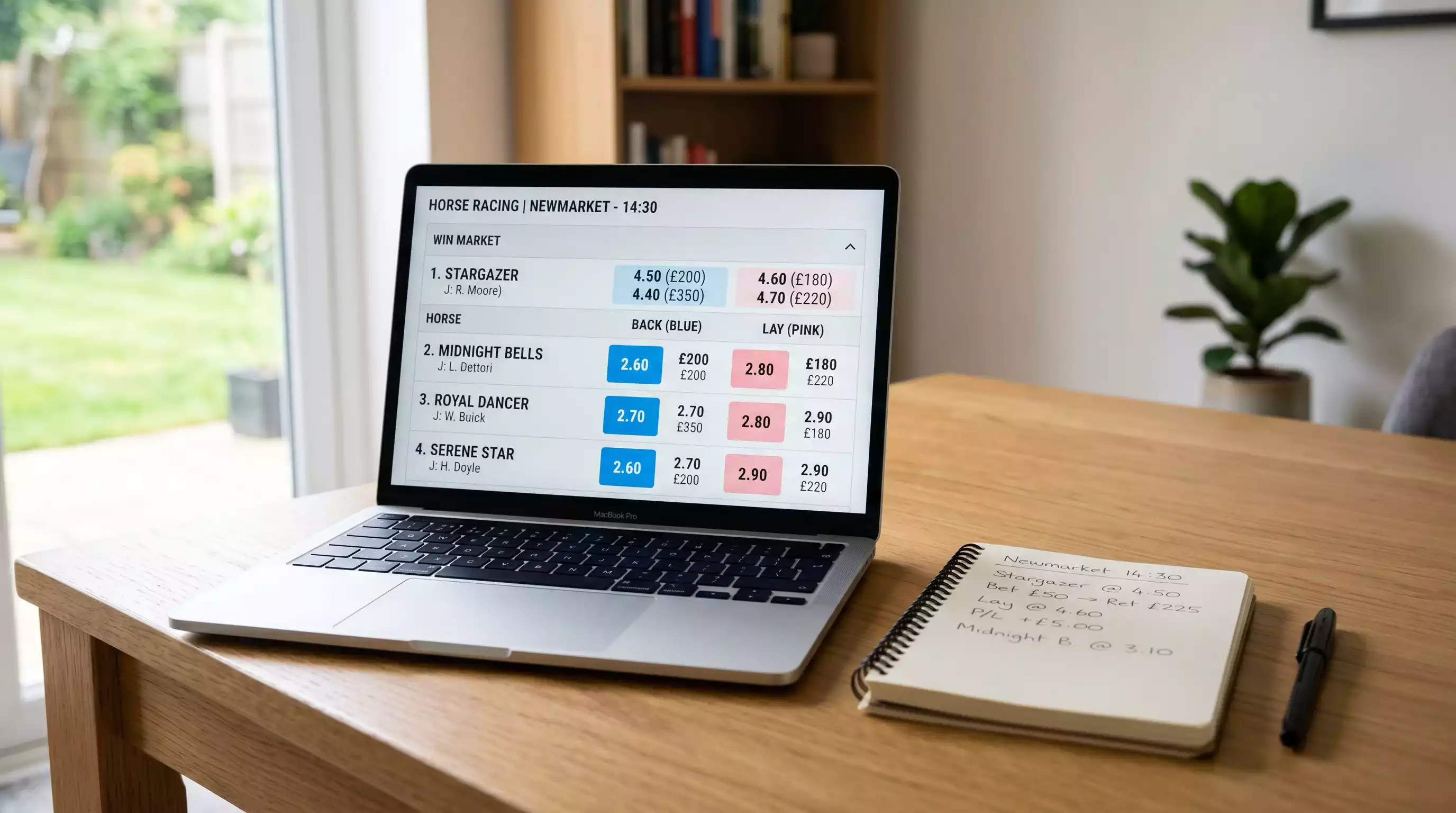
Betting exchanges dominate in-running horse racing markets. Betfair and other exchanges allow both backing and laying during races, with odds moving constantly based on user activity and visible race position. Traditional bookmakers offer limited in-play racing options, primarily due to the speed required to manage fast-moving markets.
Odds react to visual positioning. A horse taking the lead sees its price shorten; one falling back drifts. But the relationship isn’t linear or always accurate — experienced in-play traders recognise when market prices overreact to temporary positions that don’t reflect ultimate outcome probability.
Latency affects in-play success significantly. The few seconds between events happening on course and appearing on your screen can mean the difference between available prices and what you actually get matched at. Professional in-play traders use direct course feeds and optimised connections; casual punters using standard streams face inherent disadvantages.
In-Play Strategies for Racing
Pre-race to in-play arbitrage exploits odds movements at the off. Prices sometimes gap significantly when racing begins — horses who break slowly drift; those who jump sharply shorten. Having positions before the race and hedging during opening movements can lock in profit regardless of outcome.
Laying frontrunners represents a classic in-play angle. Horses who lead often come back to the field as the race develops; laying early leaders at compressed prices captures value when they fade. The strategy requires judgment about sustainable pace versus unsustainable early effort — and the discipline to absorb losses when frontrunners hold on.
Backing horses travelling well but out of position offers opportunities. Markets sometimes overreact to visual positioning, discounting horses who are travelling strongly but sitting behind early pace. If you can assess travelling indicators — ears pricked, low head carriage, responsive stride — you might identify value before the market recognises it.
Trading around pre-race selections allows profit-taking or loss-limitation. If your pre-race selection trades significantly shorter in-running, you can lay back for guaranteed profit. If it trades significantly longer due to unfavourable positioning, you face a choice: accept the longer odds now represent better value, or cut losses before they worsen.
Risks of In-Play Betting
Speed of decision-making under pressure distinguishes in-play from pre-race betting. There’s no time for careful analysis; markets move in seconds. This pressure induces mistakes that calm pre-race study would avoid. Emotional reactions — panic, greed, frustration — destroy in-play profitability more quickly than poor selection ever could.
Information asymmetry favours those with faster access. If you’re watching a race on a delayed stream while others see events live, you’re trading against people who know more than you. The price you see available might already reflect information you haven’t received. This structural disadvantage limits casual in-play traders’ potential.
Chasing losses accelerates catastrophically in-play. The continuous availability of betting opportunities during races enables rapid loss accumulation that pre-race betting’s natural breaks prevent. A punter who loses one race and immediately dives into the next race’s in-play market, then the next, can destroy a bankroll within an hour.
Visual assessment skills determine success. Reading how horses are travelling — distinguishing smooth progress from struggling effort — requires experience that casual viewers don’t possess. Professional in-play traders have typically watched thousands of races specifically studying these signals. Without that background, in-play betting becomes gambling on price movements you don’t truly understand.
Technical failures carry consequences. Losing connection mid-trade, experiencing delayed price updates, or having bet placement fail at crucial moments can transform winning positions into losses. The speed of in-play racing magnifies any technical problem. Reliable internet and tested betting platforms are prerequisites, not conveniences.
Market manipulation occasionally affects in-play prices. Sharp money moving markets rapidly can create false signals that mislead casual traders. Prices that move dramatically might reflect genuine information — or might reflect traders with agendas other than accurate probability assessment. Distinguishing meaningful moves from noise requires market experience.
Approaching In-Play Carefully
In-play betting isn’t inherently better or worse than pre-race betting — it’s different, demanding different skills and temperament. Some punters thrive on the speed and adrenaline; others find the pressure produces poor decisions. Honest self-assessment about which category you fall into should guide engagement level.
Start small if exploring in-play markets. Minimum stakes while learning the rhythms prevent expensive education. Watch races specifically to study in-play price movements without betting — developing pattern recognition before committing money. Build skills deliberately rather than diving into live trading unprepared.
Separate in-play activity from pre-race betting in your records. Track results independently to assess whether in-play adds value or drains your bankroll. Many punters discover their pre-race profits evaporate through in-play losses; others find in-play represents their most profitable activity. Data reveals which pattern applies to you — but only if you track it properly.
Consider in-play as a complement to pre-race positions rather than a standalone activity. Using in-play to hedge existing bets, lock in profits, or limit losses requires less skill than pure in-play trading. This transitional approach lets you learn market dynamics while reducing exposure to its most demanding aspects.
The fastest way to lose money betting on horses is undisciplined in-play activity. The opportunity for profit exists, but so does accelerated ruin. Approach in-play with respect for its demands, realistic assessment of your capabilities, and stake sizes that limit damage while you’re learning whether this market suits your temperament and skills.
In-Play Questions
Can I bet on horse racing during the race?
Yes, through betting exchanges that offer in-running markets. Betfair is the primary platform for in-play horse racing betting in the UK. Odds update continuously based on race position and market activity. Traditional bookmakers offer limited in-play racing options.
Is in-play horse racing betting profitable?
For experienced traders with fast data access, appropriate skills, and disciplined execution, in-play can be profitable. For casual punters reacting to delayed streams without systematic approaches, it typically produces losses faster than pre-race betting. The skills required differ significantly from pre-race selection.
Written by the editors at bet for Horse Racing.