Each-Way Betting Explained: The Complete UK Guide
 Available in US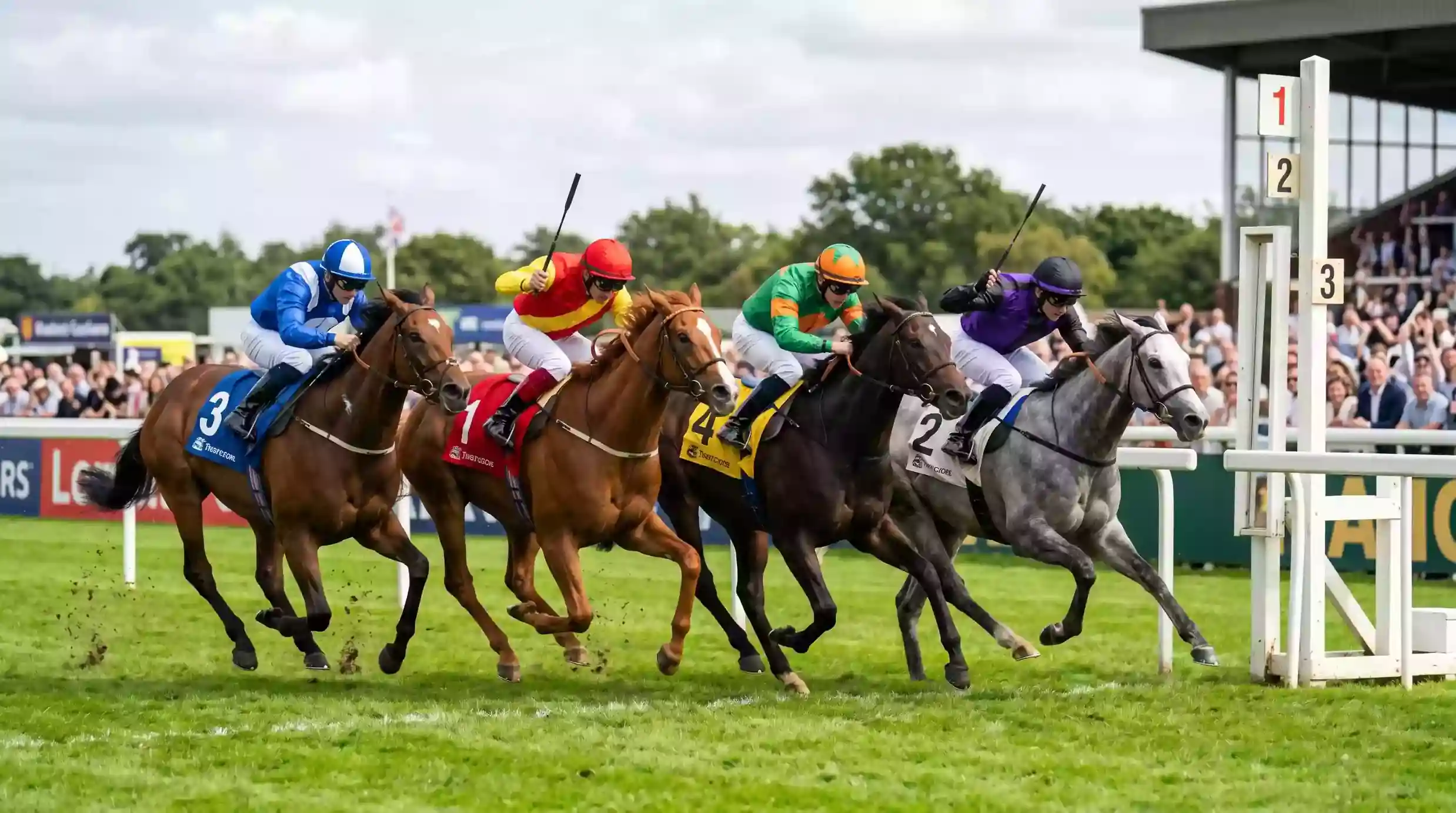
My first each-way bet cost me nothing — and taught me everything. I backed a 20/1 shot in a big handicap, purely for the win. The horse ran a blinder but got caught on the line to finish third. No return. A friend who’d taken the same horse each-way collected nearly four times his stake. Same selection, different bet structure, completely different outcome.
Around 15% of UK adults bet on horse racing at least monthly, with the 25-34 age group leading at 32%. Many of them place each-way bets without fully understanding the mechanics. They know it offers a safety net when horses finish close but don’t win. They don’t always grasp exactly how that safety net is constructed, why place terms vary, or when each-way represents genuine value versus expensive insurance.
This guide strips away the confusion. I’ll walk through what each-way actually means, how place terms work across different field sizes, and — most importantly — when the maths favours each-way over win-only betting. After eleven years specialising in UK racing markets, I’ve developed clear frameworks for these decisions that any punter can apply.
Table of Contents
- What Is an Each-Way Bet?
- Place Terms: How Many Runners, How Many Places
- Place Fractions Explained: 1/4, 1/5, and Beyond
- Calculating Each-Way Returns: Step-by-Step
- Extra Places Promotions: Getting More from Each-Way
- When Each-Way Betting Offers True Value
- Each-Way vs Win Only: Making the Right Choice
- Each-Way Doubles, Trebles, and Accumulators
- Mastering Each-Way: Your Next Steps
- Each-Way Betting Questions
What Is an Each-Way Bet?
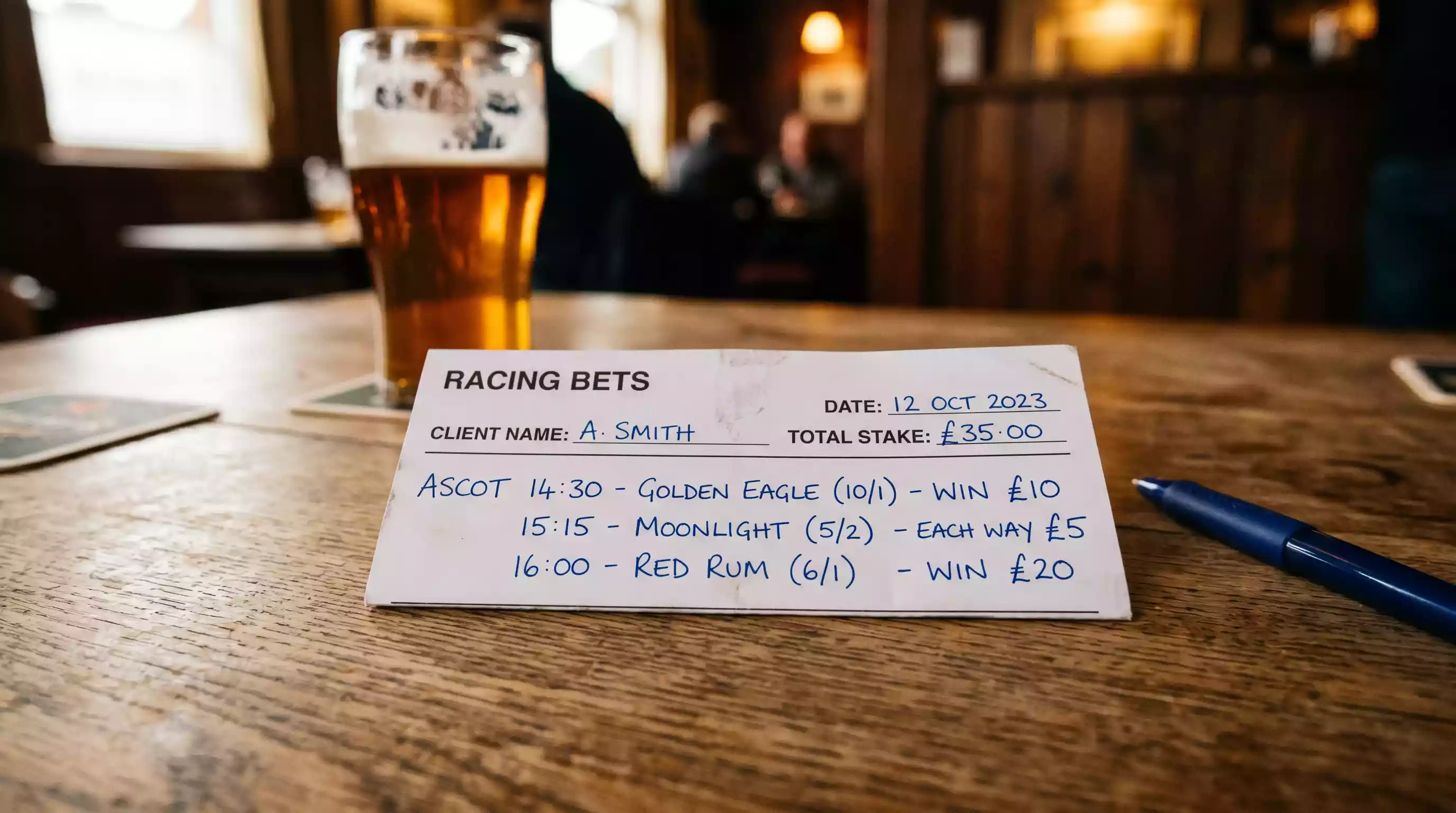
Strip away the jargon and each-way betting is simply two bets packaged together. One bet backs your horse to win. The other backs it to place — meaning finish in the top positions as defined by the race conditions. You pay for both bets, so a “10 pound each-way” bet actually costs 20 pounds: 10 on win, 10 on place.
This doubled stake catches out newcomers constantly. They see “10 pounds each-way” and assume that’s their total outlay. Then the bet settles and they’ve spent twice what they expected. The terminology misleads — “each way” describes the bet structure, not the stake amount. Always mentally double the figure you see.
When your horse wins, both parts of your bet pay out. The win portion pays at full odds. The place portion pays at a fraction of the odds — typically 1/4 or 1/5, depending on race conditions. When your horse places but doesn’t win, only the place portion pays. When your horse finishes outside the places, you lose both stakes.
The appeal is obvious: each-way softens the blow of near misses. Back a 12/1 shot that finishes second, and instead of losing everything, you collect on the place portion. The mathematics of when this insurance is worth buying — that’s where the real skill lies.
One conceptual trap to avoid: thinking of each-way as a single bet with partial returns. It’s two separate bets with their own odds calculations. The win bet settles independently from the place bet. Understanding this separation matters when calculating expected value and comparing each-way against win-only alternatives.
Place Terms: How Many Runners, How Many Places
Walk into any betting shop on Grand National day and you’ll hear confused conversations about place terms. “Does fourth pay?” “What about the big handicap at Sandown?” The rules follow patterns, but those patterns have enough exceptions to trip up anyone who hasn’t memorised them.
UK racecourse attendance reached 5.031 million in 2025 — the first time above 5 million since 2019. All those racegoers, plus millions more betting remotely, need to understand how field size determines place terms. Here’s the standard framework that applies across most bookmakers:
Races with 5-7 runners: first and second place. Races with 8-15 runners: first, second, and third place. Races with 16 or more runners: first, second, third, and fourth place. Handicap races with 16 or more runners often pay four places regardless of actual field size at the off.
These standards shift for specific race types. Handicap hurdles and chases with large declared fields typically offer four places from 12 runners rather than 16. Some bookmakers extend to five or six places on the biggest races as promotional offers. Always verify the actual terms displayed at bet placement – assumptions based on standard rules occasionally prove wrong.
Field size at declaration versus field size at the off creates another complication. A race might be declared with 18 runners, qualifying for four places under standard terms. By race time, six withdrawals reduce the field to 12. What happens to place terms? Most bookmakers lock terms at declaration – you keep four places. Some revert to three. The variance matters enormously for each-way value calculations.
Non-handicap races follow different conventions than handicaps. A 10-runner Group 1 race typically pays three places at 1/4 odds. A 10-runner handicap might pay three places at 1/5 odds. The handicap distinction reduces place fraction payouts, reflecting the more competitive nature of handicap fields where margins between runners compress.
Getting this wrong costs money. Taking each-way on a seven-runner race expecting three places to pay – then discovering only two places qualify – transforms a winning position into a losing one. Check terms before every bet, every time.
Place Fractions Explained: 1/4, 1/5, and Beyond
The place fraction determines what percentage of your win odds you receive when your horse places. It’s the multiplier that converts your win price into your place price. Get this calculation wrong and your expected returns projections fall apart.
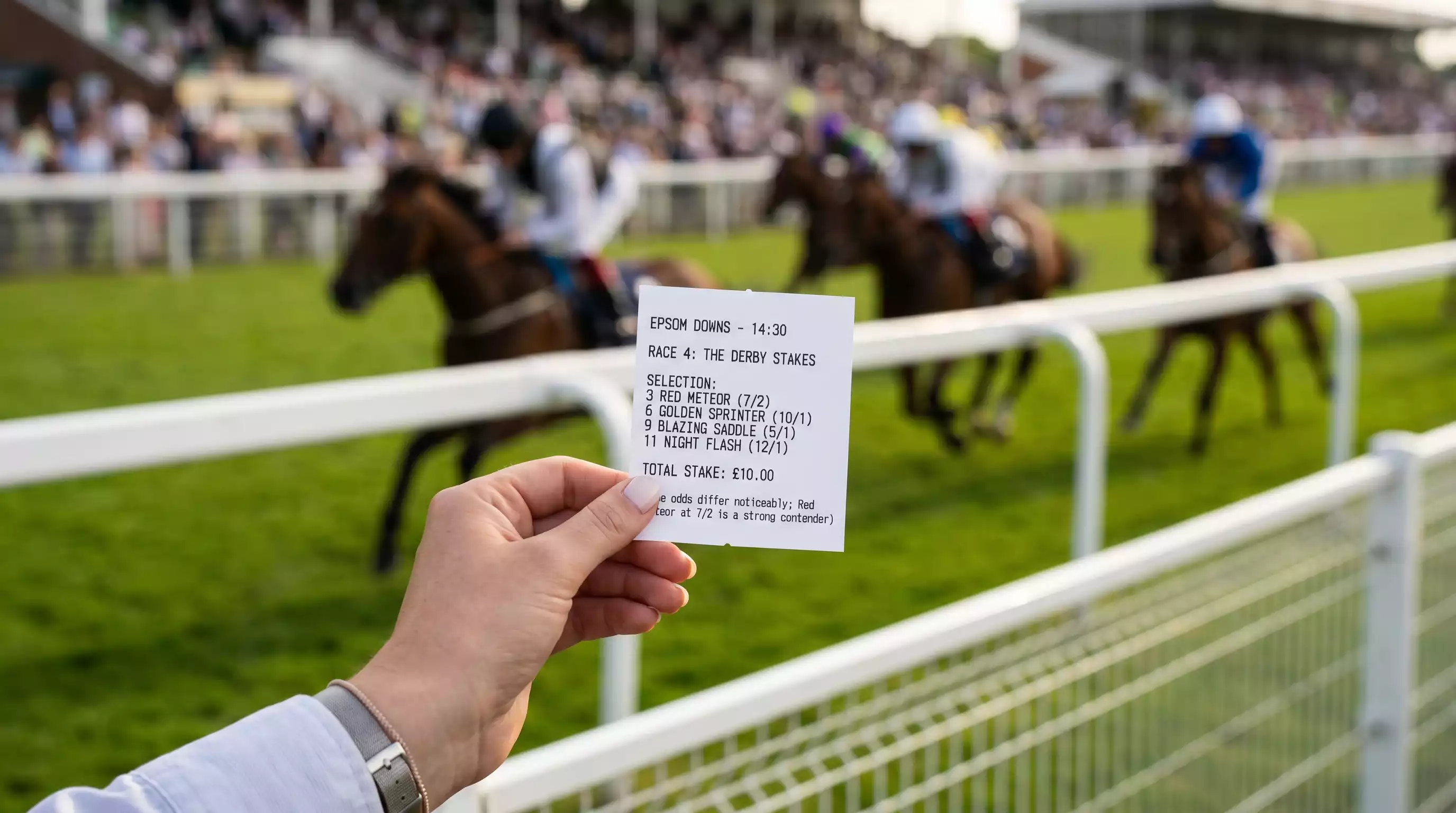
Standard UK terms offer 1/4 the odds for most non-handicap races. Back a horse at 8/1, and the place portion pays at 8/4 – which simplifies to 2/1. Your 10 pound place stake returns 30 pounds (10 x 2 plus stake). Simple enough once you’ve practiced the conversion.
Handicap races typically drop to 1/5 the odds. That same 8/1 shot now pays 8/5 for a place, which is 1.6/1. Your 10 pound place stake returns 26 pounds. The difference between 1/4 and 1/5 adds up significantly across multiple bets – 1/4 returns 15% more on the place portion than 1/5 at any given price.
Why the distinction? Handicaps aim to produce closer finishes by weighting horses according to ability. More competitive races mean more horses with genuine place chances. Bookmakers offset this increased place probability by reducing the fraction paid. The mathematics balance — sort of. In reality, the shift to 1/5 often over-corrects in the bookmaker’s favour.
Fractional odds conversions can feel awkward. Quick mental method: for 1/4 odds, divide the numerator by 4. A 12/1 shot pays 12/4 equals 3/1 for the place. For 1/5 odds, divide by 5. That 12/1 shot pays 12/5 equals 2.4/1 for the place. Practice until these conversions become automatic.
Some bookmakers occasionally offer enhanced fractions as promotions — 1/3 odds instead of 1/4, or 1/4 instead of 1/5 on handicaps. These promotions provide genuine value uplift. A 1/3 place fraction on a 12/1 shot pays 4/1 for the place instead of 3/1. On a 10 pound each-way bet where the horse places, that’s an extra 10 pounds return. Worth hunting down when available.
Calculating Each-Way Returns: Step-by-Step
Theory means nothing without practice. Let me walk through three scenarios with the same bet — 10 pounds each-way (20 pounds total stake) on a horse at 10/1 with standard 1/4 place terms and three places paying.
Scenario one: your horse wins. The win portion pays 10 x 10/1 equals 100 pounds profit plus 10 pound stake returned equals 110 pounds. The place portion pays 10 x 10/4 (which is 2.5/1) equals 25 pounds profit plus 10 pound stake returned equals 35 pounds. Total return: 145 pounds. Total profit: 125 pounds (145 minus 20 total stake).
Scenario two: your horse finishes second or third. The win portion loses — that 10 pound stake gone. The place portion pays 10 x 2.5/1 equals 25 pounds profit plus 10 pound stake equals 35 pounds. Total return: 35 pounds. Since you staked 20 pounds total, your profit is 15 pounds. You’ve recovered your place stake plus profit, but lost your win stake.
Scenario three: your horse finishes fourth or worse. Both portions lose. Total return: zero. Total loss: 20 pounds.
Now compare to a straight 20 pound win bet at 10/1. Win: 200 pounds return, 180 profit. Lose: zero return, 20 pound loss. No middle ground. The each-way version sacrifices upside (145 vs 200 when winning) for downside protection (potential 35 return vs zero when placing but not winning).
The breakeven analysis reveals when each-way makes mathematical sense. You’re essentially paying an insurance premium — the reduced win returns — to gain place coverage. That premium is worth paying when the implied probability of placing significantly exceeds the implied probability of winning. Longer-priced horses in competitive fields hit this threshold more often than short-priced favourites.
At 10/1 with 1/4 terms, the place odds work out to 2.5/1 (implied probability around 28.5%). The win odds imply roughly 9% probability. If you genuinely believe the horse has better than 28.5% chance of placing, the place portion carries positive expected value. If you believe the win probability exceeds 9%, the win portion does too. Both can be simultaneously valuable — that’s when each-way shines.
Extra Places Promotions: Getting More from Each-Way
Royal Ascot attendance grew 4.8% last year, and Grand National day remains the biggest betting event on the calendar. Bookmakers know punters flood these meetings — and compete aggressively for their business. Extra places promotions represent one of the most valuable weapons in that competition.
The concept is simple: bookmakers extend the number of paying positions beyond standard terms. A race that normally pays three places might offer four, five, or even six places as a promotion. Your each-way bet suddenly has more ways to return money. That fifth-place finish that would normally lose now pays out.
Extra places shift the expected value calculation substantially. On big-field handicaps where bunched finishes are common, the difference between three places and five places can transform marginal bets into positive expectation plays. I’ve tracked my own results on Festival handicaps and found extra places deliver around 8-12% improved returns versus standard terms over a large sample. For a deeper exploration of how to systematically exploit these promotions, see our full guide to extra places in horse racing.
Competition peaks during major Festivals. Multiple operators offering extra places on the same race create opportunities to shop for the best terms. Seven places here, six places there, five places elsewhere – small differences matter when finishing positions cluster tightly.
When Each-Way Betting Offers True Value
Alan Delmonte, Chief Executive of the Horserace Betting Levy Board, observed that racing needs to be “presented and structured in a way that is attractive to the modern consumer.” Each-way betting remains attractive precisely because it offers genuine value in specific situations — not universally, but reliably when conditions align.
Large field handicaps represent the sweet spot. Twenty runners competing at level weights (adjusted for ability) create genuine uncertainty about finishing order. Horses regularly outrun their odds to hit the frame. The bunched nature of handicap finishes means many capable horses finish fourth or fifth – positions that often qualify for place returns.
Price matters enormously. Each-way betting on favourites rarely makes sense. At 2/1, your place portion pays 1/2 (with 1/4 terms) – odds that imply high probability but deliver minimal returns. You’re paying for insurance against an outcome (placing without winning) that’s already unlikely given the short price. Win-only betting suits favourites better.
The value inflection point sits roughly around 8/1 for most race types. Above this price, the place odds begin offering standalone value. A 12/1 shot paying 3/1 for the place resembles a separate reasonable bet rather than mere insurance. At 20/1, the 5/1 place portion often carries genuine edge if you’ve identified a live contender.
Field composition influences the calculation. A 10/1 shot in a race with two overwhelming favourites has strong place chances — the favs will fill two spots, leaving your selection competing for third against weaker opposition. The same 10/1 shot in an open race without clear favourites faces stiffer competition for every position.
Avoid each-way in small fields, on short-priced horses, and in races with dominant favourites likely to fill multiple places. Embrace each-way in big handicaps, on double-digit prices, and when assessing your selection has genuine place credentials beyond just a puncher’s chance.
Each-Way vs Win Only: Making the Right Choice
The question I get asked most often: should I bet each-way or stick to win only? There’s no universal answer, but there are clear frameworks for deciding.
Start with your selection’s profile. Is this a horse you believe can win, or one you think will run well without necessarily winning? If victory seems genuinely possible, each-way makes the bet larger but adds protection. If you’re selecting primarily for place chances with winning being a bonus, each-way is essential — you’re betting on the place, with the win portion as a lottery ticket.
Consider the alternative use of funds. A 10 pound each-way bet costs 20 pounds. That same 20 pounds could back two different horses at 10 pounds win only. Spreading stakes across multiple selections sometimes produces better returns than concentrating on one horse each-way. The maths depends on how you rate each selection’s chances and the odds available.
Short prices favour win only. Below about 4/1, the place portion of each-way bets offers such thin returns that the doubled stake rarely justifies the protection. You’re paying premium prices for minimal insurance coverage. Accept the win-or-lose binary at short prices.
Long prices favour each-way — to a point. At 20/1 and above, each-way makes sense when you genuinely believe in place chances. But at 50/1 or 100/1, the win odds already price in massive longshot risk. Adding each-way doubles your exposure to something extremely unlikely. For true outsiders, consider smaller win-only stakes rather than each-way.
The middle ground between 6/1 and 16/1 is where each-way decisions get interesting. Field size, race type, place terms, and extra places promotions all factor into the calculation. No simple rule applies. Develop your judgement by tracking results across both bet types over time.
Each-Way Doubles, Trebles, and Accumulators
Each-way singles are straightforward. Each-way multiples? That’s where complexity multiplies alongside the legs. The mathematics become intricate enough that many experienced punters avoid them entirely — not because they lack value, but because the calculations require concentration.
An each-way double contains four separate bets: win double (both horses win), place double (both horses place), and two single-win/single-place combinations. Wait – that’s not quite right. Let me correct that. An each-way double is actually two bets: a win double and a place double. Your 1 pound each-way double costs 2 pounds total. The win double needs both to win. The place double needs both to place.
When all selections win, each-way multiples pay handsomely. The win double pays at full combined odds, and the place double adds supplementary returns at the combined place odds. When selections place without winning, the place double still delivers — sometimes meaningfully, sometimes modestly, depending on the prices involved.
The challenge: assessing expected value across multiple interdependent outcomes. A three-leg each-way accumulator requires all three horses to place for any return on the place portion. If two place and one finishes fourth outside places, the entire place accumulator loses. The win portion obviously loses too unless all three won.
My general rule: keep each-way multiples short. Doubles and trebles retain reasonable place-portion probability. Four legs and beyond push place accumulator odds into territory where meaningful returns require significant luck. At that point, the insurance value of each-way evaporates — you’re just doubling stake on unlikely outcomes.
One scenario where each-way multiples shine: multiple selections across a single competitive meeting, each at double-digit prices with genuine place credentials. A Cheltenham Festival each-way treble combining three handicap selections at 12/1, 14/1, and 10/1 can deliver substantial place returns even without any winners. The place accumulator at combined odds around 10/1 (roughly) represents real value if you’ve identified live contenders.
Mastering Each-Way: Your Next Steps
Each-way betting rewards punters who understand its mechanics and apply them selectively. The doubled stake requirement means each-way costs more than win-only betting — that extra cost needs justification through improved expected value or risk management that suits your approach.
Start by tracking your results separately for each-way and win-only bets. After fifty or a hundred bets of each type, patterns emerge. You’ll discover whether your selection skills favour the place safety net or whether concentrating stakes on win-only delivers better returns for your particular method.
Match bet type to situation rather than defaulting to one approach. Big-field handicaps at double-digit prices with extra places available? Each-way makes sense. Short-priced favourite in a small-field novice chase? Win only, every time. Let the race conditions and your assessment guide the choice.
Finally, remember that each-way betting interacts with Best Odds Guaranteed — both the win and place portions can receive SP upgrades when prices drift. Combining intelligent each-way selection with BOG protection maximises your edge across UK racing markets. The tools exist. Using them well separates profitable punters from the crowd.
Each-Way Betting Questions
What happens to my each-way bet if my horse finishes second?
Your win portion loses but your place portion wins. You collect at the place odds, which are typically 1/4 or 1/5 of your original win odds depending on race type. A 10/1 each-way bet with 1/4 terms returns 2.5/1 (plus stake) on the place portion when finishing second or third.
Do all bookmakers offer the same place terms?
No. Standard terms exist but vary by race type and field size. Most non-handicaps pay 1/4 odds while handicaps often pay 1/5. Some bookmakers offer enhanced terms as promotions. Extra places offers extend paying positions beyond standard. Always check displayed terms before placing each-way bets.
Can I do each-way betting on small fields?
You can, but value diminishes. Races with 5-7 runners typically pay only two places. Races with fewer than 5 runners often void the each-way option entirely. Small fields combined with few paying places makes the place portion less valuable – win-only betting often makes more sense.
Is each-way betting good for beginners?
Each-way suits beginners who find the all-or-nothing nature of win betting stressful. The safety net of place returns eases new punters into racing. However, understanding the doubled stake requirement and place fraction calculations matters. Start with small each-way stakes until the mechanics become second nature.
Written by the editors at bet for Horse Racing.