What Is SP in Horse Racing? Starting Price Explained
 Available in US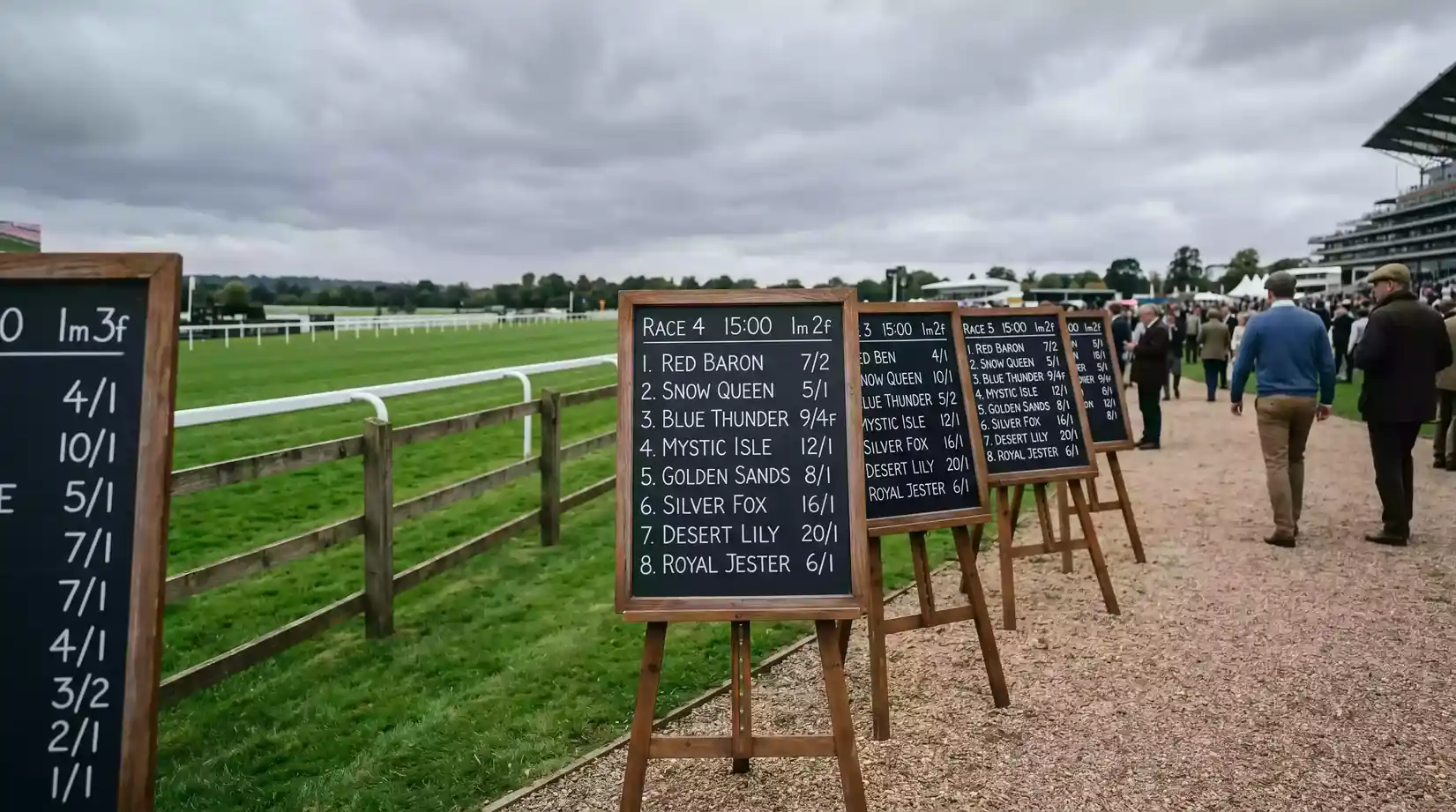
The first time I heard someone talk about “taking the SP,” I assumed they meant a specific bookmaker I hadn’t heard of. It took an embarrassingly long conversation before I realised SP wasn’t a brand name at all but a fundamental concept that underpins how odds work in British racing.
Starting Price sits at the heart of UK betting markets, yet most casual punters never think about what it actually represents or how it gets determined. Understanding SP isn’t just academic — it directly affects whether you’re getting value from your bets. When you know how Starting Price works and when to use it strategically, you gain a tool that separates informed betting from guesswork.
This guide breaks down the mechanics: what SP means, who calculates it, how it compares to early prices, and the specific situations where taking SP gives you an advantage. By the end, you’ll read racecards and betting options with clearer eyes.
What Starting Price Actually Means
Starting Price is the official odds at which a horse begins a race. It’s determined in the final moments before the starter releases the field, reflecting where the betting market settled after all the pre-race action. When you bet at SP, you’re accepting whatever those final odds turn out to be rather than locking in a specific price beforehand.
Think of it as the market’s verdict after everyone has had their say. Throughout the morning and afternoon, money flows into the market — backing horses whose connections fancy them, opposing horses with problems in the paddock, responding to late market moves and stable whispers. The Starting Price captures the endpoint of all that information.
In the context of UK racing’s £766.7 million annual gross gaming yield from horse racing alone, Starting Price serves as the reference point around which everything else revolves. Off-course bookmakers use it as a benchmark. Exchanges settle at it when liquidity is thin. Tote pools calculate dividends that often track close to SP. Even when you take an early price, the comparison point for whether you got good value is what SP turned out to be.
The term dates back to when all bets were placed at the racecourse itself, and the only available odds were those offered by on-course bookmakers at the moment of starting. Today, with most betting happening through apps and websites hours before races, SP has evolved from the default into a deliberate choice — one with its own strategic applications.
How Starting Price Is Calculated
I once stood in the betting ring at Newmarket watching a bloke with a notepad frantically scribbling as the horses cantered to post. He was a representative from the Starting Price Regulatory Commission, doing the unglamorous work that determines millions of pounds in bet settlements. The process is far more human than most punters realise.
Starting Prices are derived from on-course bookmaker prices at designated racecourses. At the exact moment the race begins, assessors record the odds being offered in the betting ring by the key market-forming bookmakers. They then calculate a weighted average that becomes the official SP. This happens for every race at every meeting, day in, day out.
The system has evolved significantly since the old days of chalked boards and hand signals. Today, on-course bookmakers have electronic displays showing their current odds, and the Starting Price Regulatory Commission coordinates data collection across courses. The calculation takes into account not just individual bookmaker prices but also the proportions being offered — a single bookie shouting 10/1 while everyone else shows 8/1 doesn’t drag the SP up if that outlier isn’t taking meaningful money.
Crucially, SP reflects betting at the track rather than online markets. Since on-course betting accounts for a fraction of total volume, you sometimes see disconnects between what exchanges show seconds before the off and what SP returns. Smart money hitting the course late can move SP significantly from what desk-bound punters expected. These movements happen fast — sometimes in the final thirty seconds — which is why SP can surprise both positively and negatively.
SP vs Early Price: Which to Choose
This question dominated my early years of betting. I’d spend mornings agonising over whether to grab the 5/1 on offer now or wait for SP. Half the time I got it right; half the time I watched my selection drift or shorten and kicked myself either way. Eventually, I developed a framework that removed most of the guesswork.
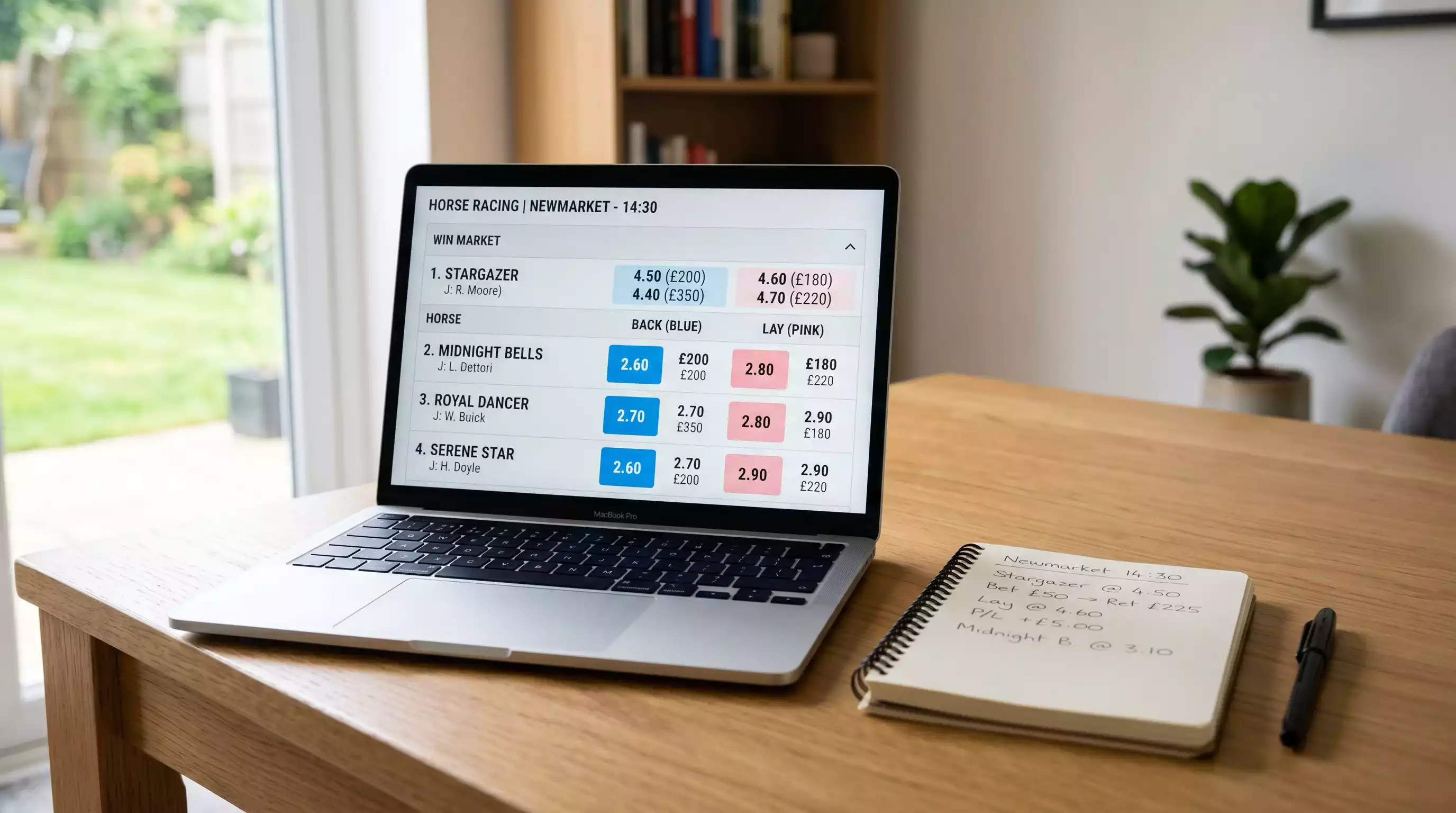
Early prices appear from the night before a race, offered by bookmakers who want to attract action ahead of the market forming properly. These prices include a margin built in for the bookmaker’s protection against uncertainty — they don’t know how the horse will look in the paddock or whether influential stable money will arrive. Taking an early price locks in those odds regardless of what happens later.
The remote casino, betting, and bingo sector generates £7.8 billion in gross gaming yield annually, and much of the horse racing portion comes from punters making early price decisions. Bookmakers price early with caution, which means value can exist in both directions — sometimes early prices underestimate a horse that steams in the market; sometimes they overestimate a horse that drifts as information emerges.
Here’s where Best Odds Guaranteed changes the equation entirely. With BOG, you can take the early price and receive SP if it turns out higher. This eliminates the downside of taking early odds — you never get worse than SP, and you might get better. When BOG is available, taking an early price you like becomes almost always the smart play.
Without BOG, the choice requires judgment. If you believe your selection is undervalued at current odds and likely to shorten, take the price. If you think the horse might drift — perhaps it’s lightly raced and unpredictable in the market, or you’ve heard concerns about ground conditions — SP keeps your options open.
When Taking SP Makes Sense
Despite the advantages of taking early prices with BOG, SP remains the right choice in several specific situations. Recognising these saves both aggravation and money.
Late decisions demand SP. When you’re watching the preliminary action at the racecourse — horses walking around the parade ring, jockeys mounting, the canter to post — you might spot something that changes your mind. A horse sweating heavily, moving poorly, or showing reluctance could be red flags the early price didn’t account for. Conversely, you might see a horse glowing with wellbeing that wasn’t on your radar. SP lets you act on that information without paying for odds that no longer reflect reality.
Expected drifters warrant SP consideration. Some horses attract support in the morning from each-way punters banking on big-field place terms, then drift as more serious money comes for the actual contenders. If you’ve identified this pattern — perhaps a consistent also-ran getting attention purely for stable reputation — SP protects you from overpaying.
Low-liquidity races present SP opportunities. In small-field novice hurdles or minor midweek flat races, the morning market barely exists. Prices might be based on tissue prices with little real money behind them. SP, though calculated on limited on-course activity, at least reflects where punters who actually studied the race put their money. I’ve seen 8/1 morning shots start at 14/1 SP in these conditions simply because nobody fancied them once the professionals weighed in.
Convenience matters too. If you’re placing bets before rushing to work and won’t monitor markets all day, SP on selections you’re uncertain about removes the need to guess market direction. Sometimes the mental overhead of price management isn’t worth the marginal edge.
Using SP Strategically
Starting Price isn’t just a fallback for when you can’t decide — it’s a deliberate tool for specific situations. I’ve shifted from treating SP as the lazy option to seeing it as a strategic choice in its own right.
The punters who consistently profit from racing understand that betting isn’t only about picking winners. It’s about getting value from those winners. SP offers value when early markets haven’t processed all available information — and given that on-course markets run until the very last moment, they often capture insights that morning prices missed.
My approach now: use Best Odds Guaranteed whenever it’s available, taking early prices I like with the safety net of SP if it’s higher. When BOG isn’t offered — on certain race types or with certain bookmakers — I default to SP unless I have strong conviction that my selection will shorten. And when late information matters most, at the big festivals where paddock inspections and stable whispers can transform a market, SP keeps me flexible until the last possible moment.
Understanding Starting Price thoroughly transformed how I approach race-day decisions. It moved me from reactive betting — grabbing whatever price was in front of me — to proactive betting where I choose my approach based on circumstances. That shift alone has been worth more than any individual tip ever could be.
SP Questions Answered
Can SP be better than the early price I took?
Yes, frequently. If you took 4/1 in the morning but money comes for your horse throughout the day, SP might return 3/1 – making your early price better. The reverse happens equally often. This is why Best Odds Guaranteed matters so much: it guarantees you receive whichever is higher.
What happens if I take SP and the horse is withdrawn?
If you bet at SP on a horse that becomes a non-runner before the race, your stake is returned in full. There’s no Rule 4 deduction because no official SP was ever recorded for that selection. This differs from early prices where withdrawal timing affects whether deductions apply.
Prepared by the bet for Horse Racing editorial staff.