Tote Betting Explained: Pool Betting Guide UK
 Available in US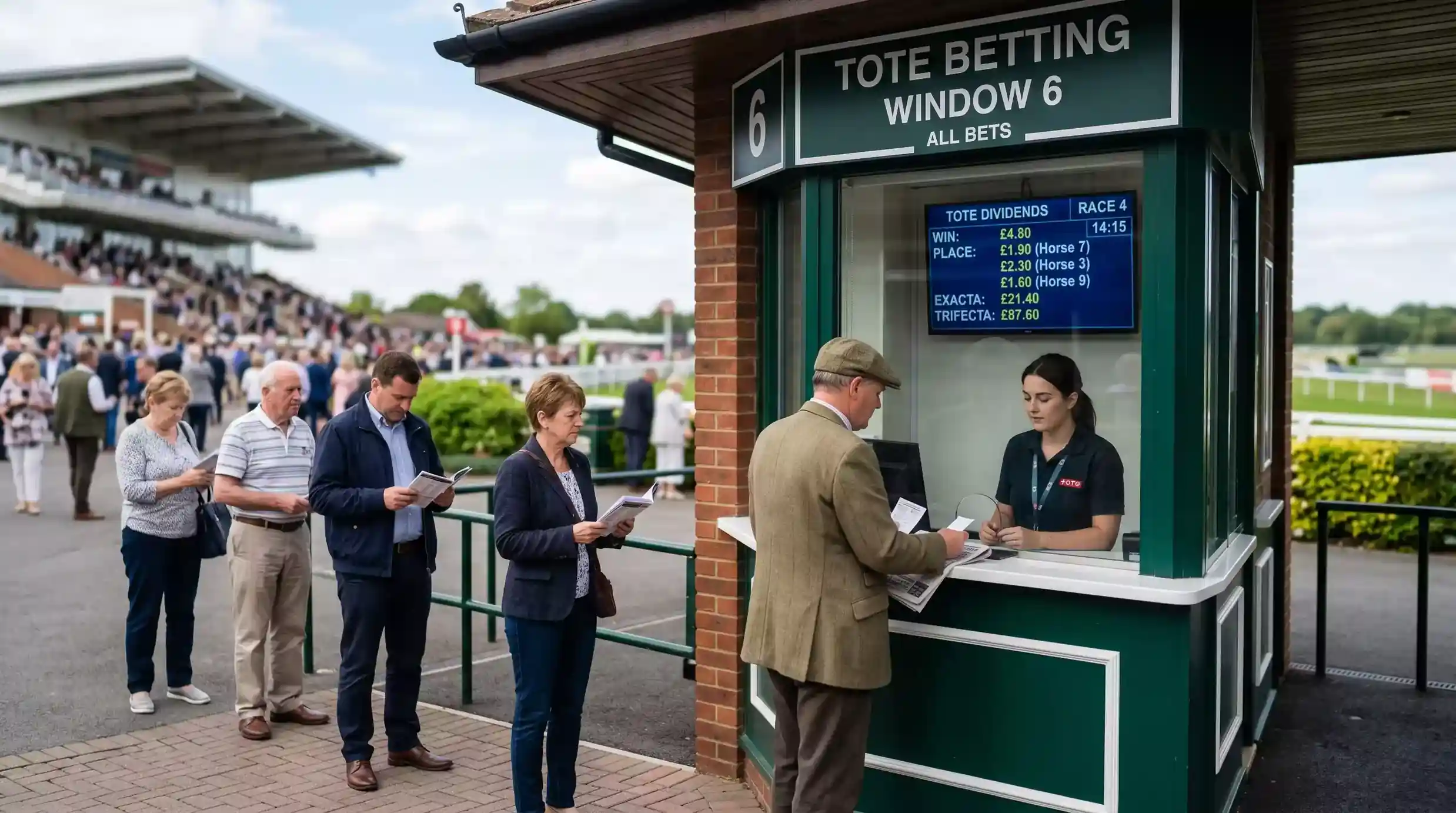
Most punters I meet have heard of the Tote but couldn’t explain how it actually works. They know it’s different from normal betting, something about pools, but the mechanics remain fuzzy. I was the same until a friend dragged me into a Placepot syndicate at Cheltenham and I realised I’d been missing an entire dimension of horse racing betting.
Pool betting operates on fundamentally different principles than fixed odds. You’re not betting against a bookmaker but alongside other punters, sharing in a communal pot that grows as more people participate. The Tote — Britain’s original and only licensed pool betting operator — has been running this system since 1928, though these days Betfred operates it under licence.
Understanding pool betting opens up betting options that don’t exist elsewhere. The Placepot can pay life-changing sums from modest stakes. The Jackpot offers lottery-scale returns. And on certain days, Tote dividends crush what fixed odds would have paid. This guide covers how it all works and when pool betting might serve you better than traditional bookmakers.
How Pool Betting Differs from Fixed Odds
When you bet with a bookmaker at fixed odds, you know exactly what you’ll win before the race starts. Back a horse at 10/1 for £10, and a winner returns £110. The bookmaker sets the price, takes the risk, and profits from the margin built into their odds.
Pool betting flips this model entirely. Every stake goes into a communal pool. After the race, a percentage is deducted for operating costs and levy contributions — the Horserace Betting Levy Board received a record £108.9 million last year, with pool betting contributing its share — then the remainder is divided among winning tickets. You don’t know your return until all bets are in and the result is confirmed.
This creates fascinating dynamics. On popular horses, dividends can be poor because the pool is split so many ways. But back an unfancied winner and you might share the pot with just a handful of other successful punters. I’ve seen Tote dividends pay three times the SP when a 25/1 shot won a big Saturday handicap and most of the pool money had gone on shorter-priced runners.
The uncertainty puts some people off. They want to know their potential return before committing. But for those who embrace it, pool betting offers opportunities that fixed odds cannot — particularly in multi-race bets where the compounding effect of good dividends produces astronomical returns from small stakes.
Tote Bet Types: Placepot, Jackpot, and More
The Tote offers a range of pool bets, each with distinct characteristics. Learning which suits different situations took me years of trial and error — let me save you that time.
The Placepot is the flagship product and the one most punters encounter first. You select a horse to place in each of the first six races at a meeting. “Place” follows standard each-way terms: first two in races of five to seven runners, first three in larger fields, first four in handicaps of sixteen or more. Get all six to place and you share the pool. Stakes start from £1 per line, but you can include multiple selections in each race through permutations — banking obvious contenders and spreading across others. Saturday Placepots at major meetings regularly pay thousands from £1 stakes.
The Quadpot simplifies things by covering just races three through six. It’s easier to land, the pools are smaller, and dividends typically range from tens to hundreds of pounds rather than thousands. Good for testing the waters or when the early races look unpredictable.
The Jackpot demands winners rather than placers across all six races. The difficulty is reflected in the returns — payouts occasionally reach six figures. Most Jackpots aren’t won outright, rolling over to accumulate enormous pools for lucky punters who nail all six on subsequent days.
The Scoop6 operates on selected ITV-broadcast races across different meetings on Saturdays. It’s effectively a national Jackpot with a bonus fund for winners who correctly predict the following week’s nominated race. Millions have been won.
Single-race pools include Win (self-explanatory), Place (picking horses to finish in placed positions), Exacta (first and second in correct order), Trifecta (first, second, and third in order), and Swinger (two horses to fill two of the first three places in any order). These compete directly with fixed-odds equivalents, sometimes paying better, sometimes worse.
How Tote Dividends Are Calculated
The maths behind dividends confused me until I saw it laid out simply. Here’s how it works for a basic win pool.
Imagine a race where the total pool is £100,000. The Tote deducts its takeout — typically around 13-15% depending on bet type — leaving £85,000 to distribute. If £17,000 of the original pool backed the winning horse, that £85,000 gets divided among those tickets. The dividend becomes £85,000 divided by £17,000, which equals £5 returned per £1 staked. Express that as odds, and you’re looking at 4/1.
Compare that to what fixed odds paid. If the SP was 3/1, Tote backers got significantly better value. If SP was 6/1, they got worse. The relative value depends entirely on how the pool money distributed versus where bookmakers set their markets.
For multi-race bets like the Placepot, dividends compound through each leg. After race one, the pool allocates portions to winning unit holders. After race two, that portion redistributes among those who also got race two right. By race six, the pool has concentrated dramatically — assuming anyone landed all six legs.
Dividends are declared per £1 unit after the final leg settles. A Placepot dividend of £847.30 means every £1 stake that nailed all six selections returns £847.30. If you played a £2 perm, you’d get £1,694.60. The beauty is you don’t need to calculate this yourself — the Tote announces dividends within minutes of the final race, and your account credits automatically.
Strategies for Tote Betting
Pool betting rewards different thinking than fixed odds. The goal isn’t just finding winners — it’s finding winners that others missed.
Banker selections anchor sensible Placepot play. A banker is a horse you’re confident will place, so confident you stake your entire perm on it rather than spreading across alternatives. This keeps costs down while concentrating exposure. I typically use one or two bankers per Placepot in races where short-priced favourites look almost certain to run their race — Group 1 performers in lesser company, top trainers with obvious standouts.
Permutations expand coverage where uncertainty reigns. In open handicaps with fifteen runners, picking one horse to place is optimistic. Taking three or four selections that race increases your chances but multiplies your stake. A Placepot with two bankers and four races covered by three selections each costs £1 x 1 x 1 x 3 x 3 x 3 x 3 = £81 in total lines. Scale your unit stake to what you can afford.
Contrarian thinking pays in pools. When everyone backs the favourite, the dividend for that horse shrinks. Find value by including horses that might place but aren’t attracting pool money — proven each-way performers, improving types, course specialists. If one of them hits while the favourite flops, your dividend explodes because fewer tickets survived that leg.
Single-race Tote bets suit specific scenarios. When you fancy a longshot in a big field, check whether Tote Win odds exceed fixed odds — they sometimes do when the public has piled onto favourites. Exacta and Trifecta pools can pay extraordinarily well when results confound expectations, though the hit rate makes them lottery-adjacent entertainment rather than serious betting vehicles.
Adding Tote to Your Betting Mix
Pool betting won’t replace fixed odds for everyday punting, but it earns a place in any serious racing enthusiast’s toolkit. The Placepot in particular offers something unique — a way to engage with an entire meeting’s racing rather than individual races, with the potential for substantial returns from stakes that won’t stress your bankroll.
Start with Quadpots to learn the mechanics on a smaller scale. Graduate to Placepots once you’re comfortable with permutation maths and banker selection. Leave Jackpots and Scoop6 for occasional speculative punts when pools have grown irresistibly large. And keep an eye on single-race Tote odds when you fancy outsiders — sometimes the pool market is more generous than any bookmaker.
The punters I know who enjoy pool betting most are those who treat it as a different game entirely. They’re not chasing fixed-odds returns or comparing dividends race by race. They’re playing the pool dynamics, hunting for value through contrarian thinking, and enjoying the communal element of sharing in a pot with fellow enthusiasts. That mindset makes Tote betting rewarding in ways that transcend pure profit.
Tote Betting Questions
What is the Tote and how does pool betting work?
The Tote is Britain’s pool betting operator, currently run by Betfred under licence. Unlike fixed odds where the bookmaker sets prices, pool betting collects all stakes into a communal pot. After deductions for operating costs, the pot is divided among winning tickets. Your return depends on how many others backed the same outcome – fewer winners means bigger individual payouts.
Can I place Tote bets online?
Yes, through Betfred’s website and app, or through most major bookmakers who feed into Tote pools. The interface shows live pool sizes and estimated dividends, though final dividends are only confirmed after betting closes.
Why does the Tote dividend sometimes beat fixed odds?
When public money concentrates on favourites, horses that win at bigger prices pay proportionally larger Tote dividends. The pool mechanism rewards finding overlooked winners. On days when short-priced favourites oblige, Tote dividends often trail SP because the pot splits so many ways.
Published by the bet for Horse Racing team.