How to Bet on Horses Online UK: Beginner’s Guide
 Available in US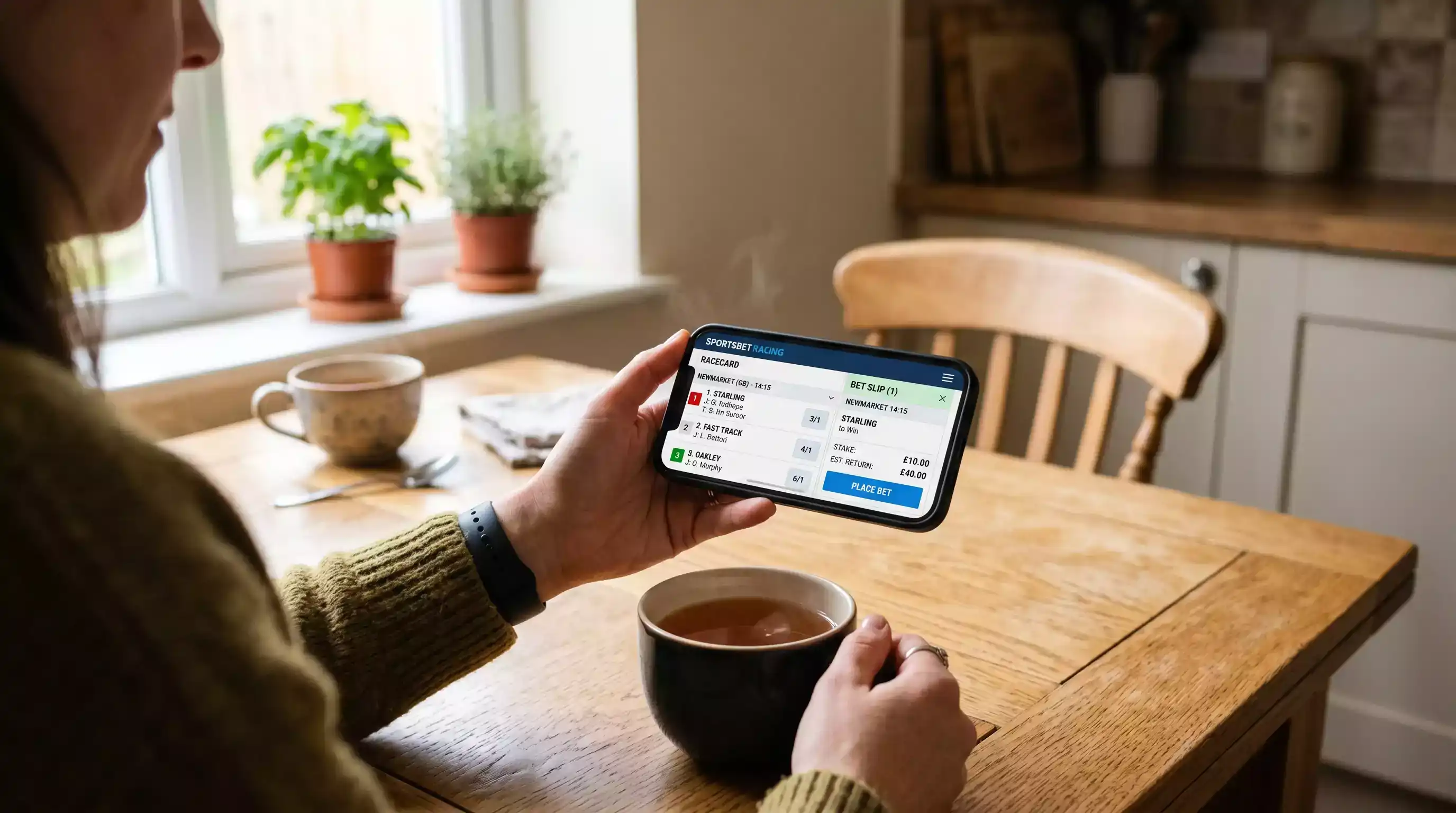
I still remember sitting in a pub near Cheltenham, watching the Gold Cup on a wall-mounted screen, surrounded by regulars who seemed to speak an entirely different language. “Take the 7/2 each-way,” one said. “Nah, the SP will drift,” another replied. I nodded along, pretending I understood, while secretly wondering how anyone made sense of it all.
That was eleven years ago. Today, roughly 15% of UK adults place at least one horse racing bet every month — and the vast majority do it online. The barrier to entry has never been lower, yet the learning curve still feels steep when you’re standing at the bottom looking up. This guide exists because I wish someone had handed it to me back then: a straightforward path from complete novice to placing your first confident bet.
We’re not going to cover advanced strategies or exotic multiples here. What we will do is walk through every practical step — choosing where to bet, setting up an account, understanding what you’re looking at on screen, and actually placing that first wager. By the end, you’ll have the foundation to build on, the confidence to experiment, and none of the confusion I carried around for far too long.
Choosing Your First Bookmaker
Your first decision matters more than most beginners realise. I’ve watched friends sign up with the first name they recognised from a television advert, only to discover weeks later that the site had terrible odds on racing or no live streaming at all. Spend fifteen minutes choosing well now, and you’ll save yourself frustration later.
The non-negotiable requirement is a UK Gambling Commission licence. Every legitimate bookmaker operating in Britain holds one, and you can verify it on the Commission’s public register. This licence isn’t bureaucratic box-ticking — it guarantees that your funds are protected, that the operator follows strict fairness rules, and that you have recourse if something goes wrong. I’ve heard horror stories from punters who chased better odds on offshore sites only to find their winnings blocked or their accounts frozen with no explanation. Don’t let that be you.
Beyond licensing, consider what matters for horse racing specifically. Best Odds Guaranteed is a feature where the bookmaker pays you at Starting Price if it’s higher than the odds you took — essentially giving you a free insurance policy on price movements. Live streaming lets you watch races directly through the app, which transforms the experience from staring at numbers updating to actually seeing your horse run. Mobile usability matters because you’ll likely place most bets from your phone, especially if you’re at a racecourse or following afternoon cards from work.
For your first account, prioritise simplicity and racing focus over welcome bonus size. A £50 free bet sounds appealing until you read the terms and discover you need to wager it ten times on accumulator bets before withdrawing anything. Better to start somewhere with a clean interface, good racing coverage, and a bonus you can actually use on the type of betting you’ll do.
Setting Up Your Betting Account
The UK now has over 24 million active online betting accounts, which tells you two things: the process isn’t difficult, and you’re joining a crowd that spans all demographics. Setting up takes about ten minutes, though verification can add a day or two depending on the operator.
Registration asks for standard personal details — name, address, date of birth, email, phone number. You’ll create login credentials and usually a four-digit PIN for added security. The critical step is identity verification: UK regulations require bookmakers to confirm you are who you claim to be before you can deposit significant amounts or withdraw any winnings. Most sites now use automated document checking. You’ll upload a photo of your passport or driving licence, sometimes alongside a utility bill or bank statement showing your address. Some bookmakers verify instantly by cross-referencing electoral rolls and credit databases.
Deposits work through the usual suspects — debit cards, PayPal, bank transfer, or e-wallets like Skrill. Credit cards were banned for gambling in 2020, so don’t waste time looking for that option. I recommend starting with your debit card for simplicity, keeping in mind that deposits are instant while withdrawals typically take one to three days to return the same way.
Before you add funds, set your deposit limits. Every licensed bookmaker offers this feature, usually found in the responsible gambling or account settings section. Decide what you’re comfortable losing over a day, week, and month — then set those limits before you’re in the heat of the moment. It’s a five-minute task that can save you from yourself on a bad afternoon.
Placing Your First Horse Racing Bet
Here’s where the rubber meets the road. I’m going to walk you through exactly what happens when you place a bet, because the first time I tried it, I nearly backed the wrong horse at the wrong racecourse entirely.
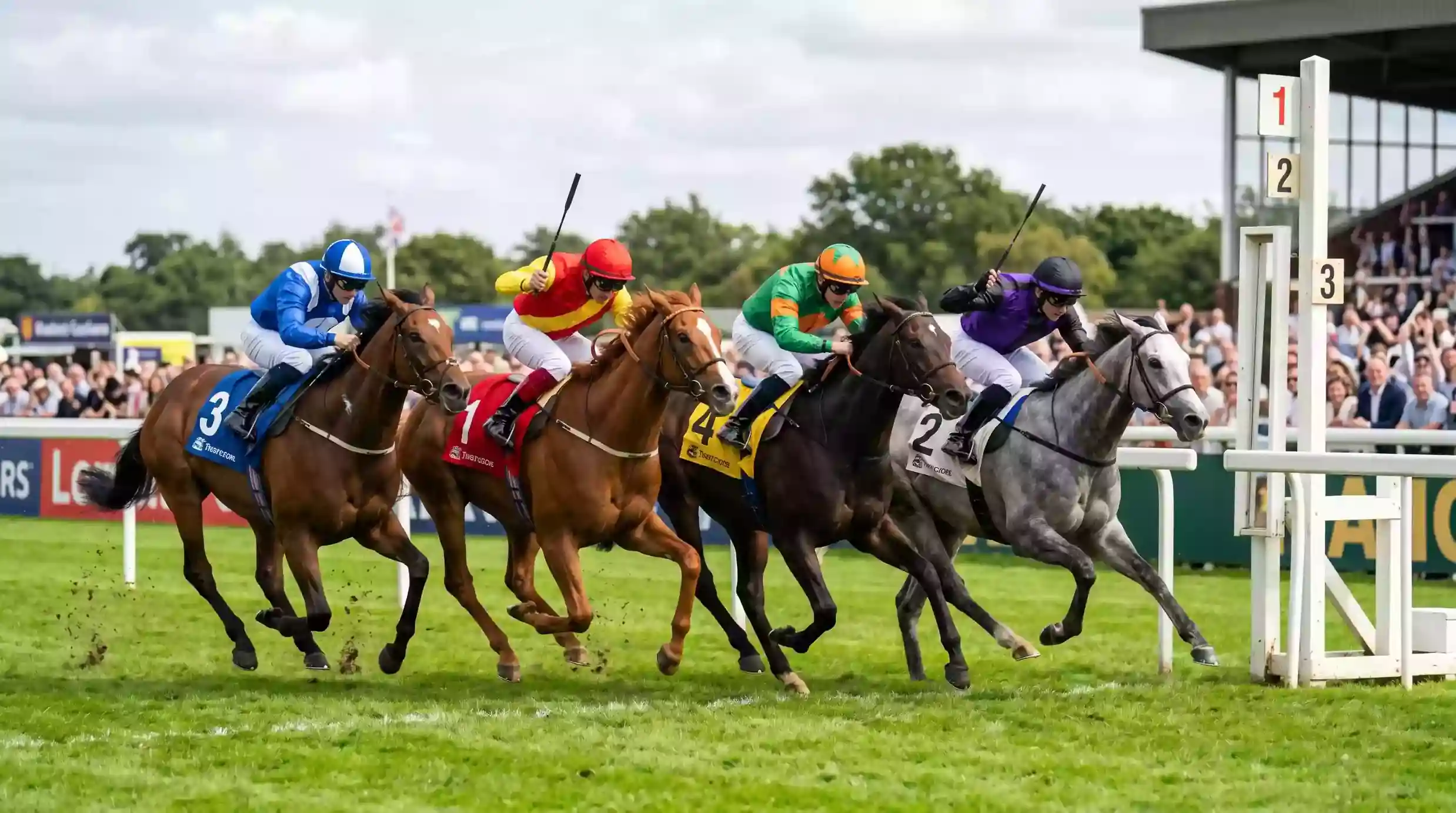
Open your bookmaker’s app or website and navigate to horse racing — it’s usually prominent on the homepage or main menu. You’ll see a list of today’s meetings (racecourses where events are happening). Each meeting shows race times, typically at 15 to 30 minute intervals throughout the afternoon. Click on a specific race to see the field: all the horses competing, their numbers, jockeys in coloured silks, trainers, and crucially, the odds.
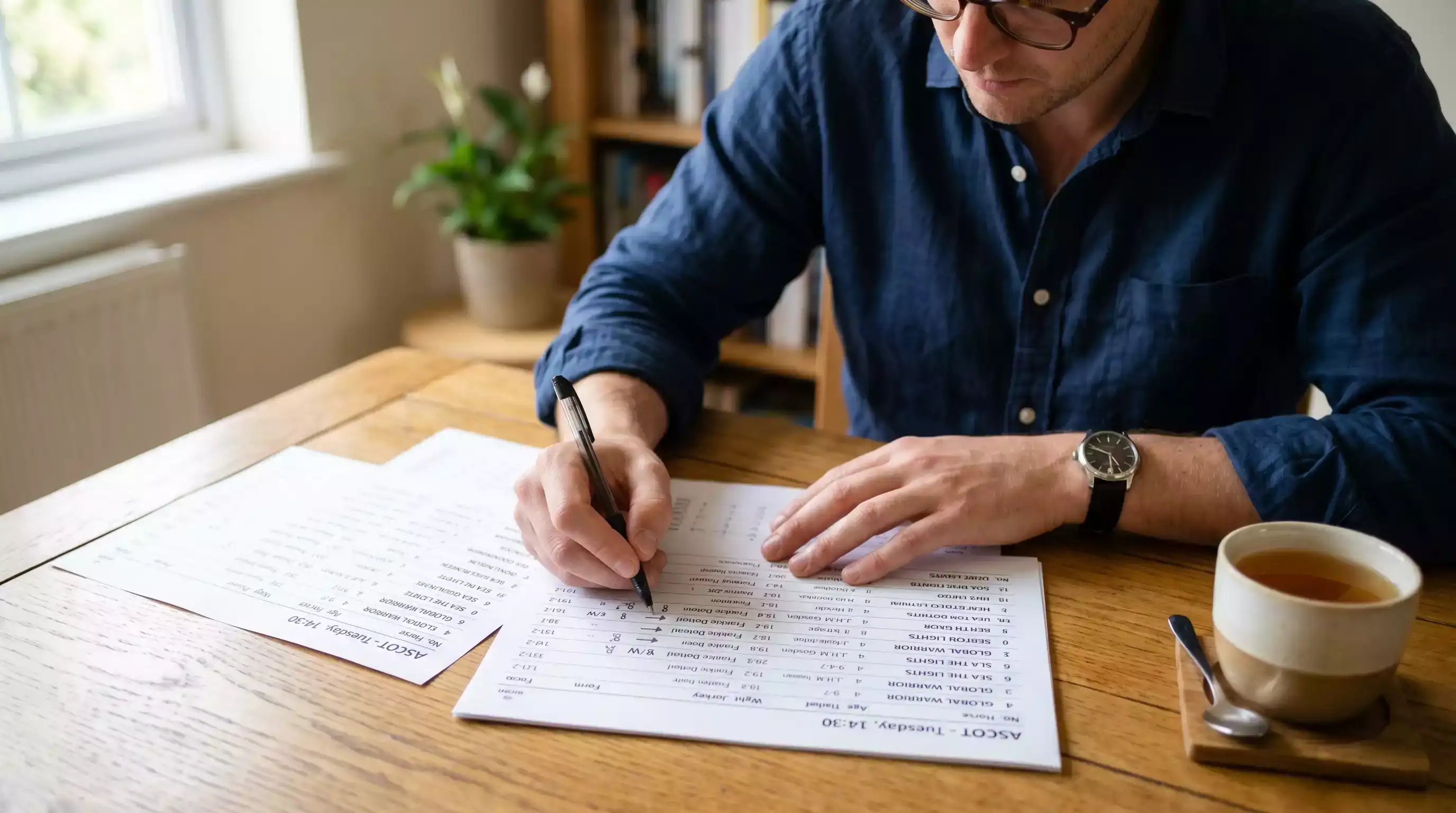
The racecard tells you everything you need to make a decision, though interpreting it takes practice. For now, focus on the basics. The horse’s name is obvious. Next to it, you’ll see form figures — a string of numbers and letters showing recent finishing positions. A “1” means they won that race; “2” means second place; “0” means finished outside the top nine. Letters indicate events: “F” for fell, “P” for pulled up, “U” for unseated rider. A dash separates different racing seasons.
The odds appear in fractional format by default (5/1, 11/4, evens), though you can switch to decimals in settings. When you see 5/1, it means for every £1 you stake, you win £5 profit if the horse wins, plus your stake back. So a £10 bet at 5/1 returns £60 total — £50 profit plus your original £10.
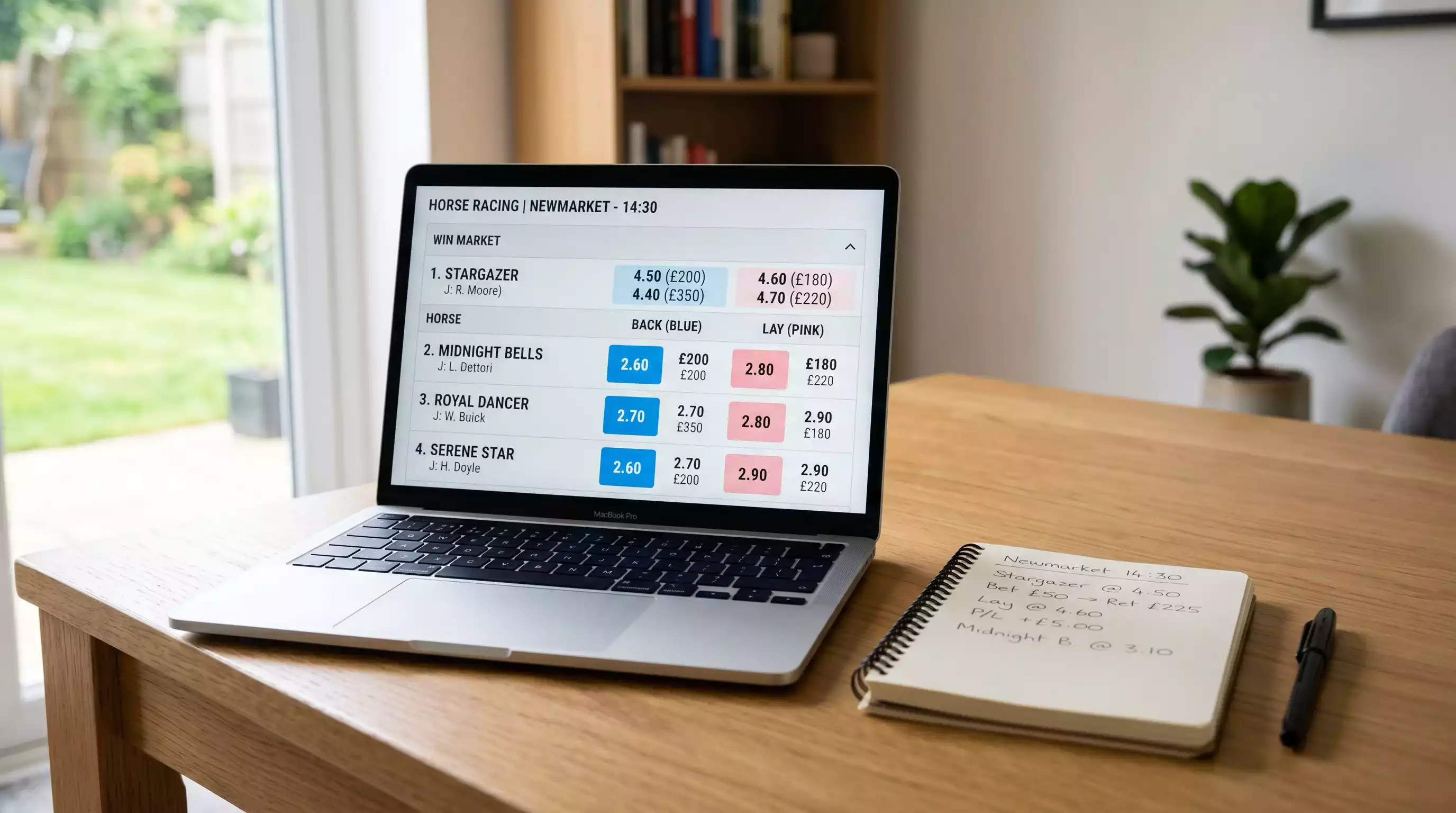
To actually place the bet: tap on the odds next to your chosen horse. This adds the selection to your bet slip, usually visible at the bottom of the screen or in a sidebar. Enter your stake amount, review the potential returns shown, and confirm. That’s it. You’ve placed a bet. The confirmation appears immediately, and you can track the race through live streaming or odds updates on the same screen.
Basic Bet Types for Beginners
I spent my first year of betting exclusively on win singles because nobody told me there were other options that might suit my selections better. Learn from my narrow-mindedness.
A win bet is exactly what it sounds like: your horse must finish first for you to collect. It’s clean, simple, and the default choice for most punters. If you fancy a horse and think it’s going to win, back it to win. No complications.
A place bet pays out if your horse finishes in the top two, three, or four positions depending on the size of the field. The odds are lower than a win bet because you’re covering more outcomes. This suits situations where you think a horse will run well but aren’t confident about victory — perhaps it’s a big field handicap where anything can happen in the final furlong.
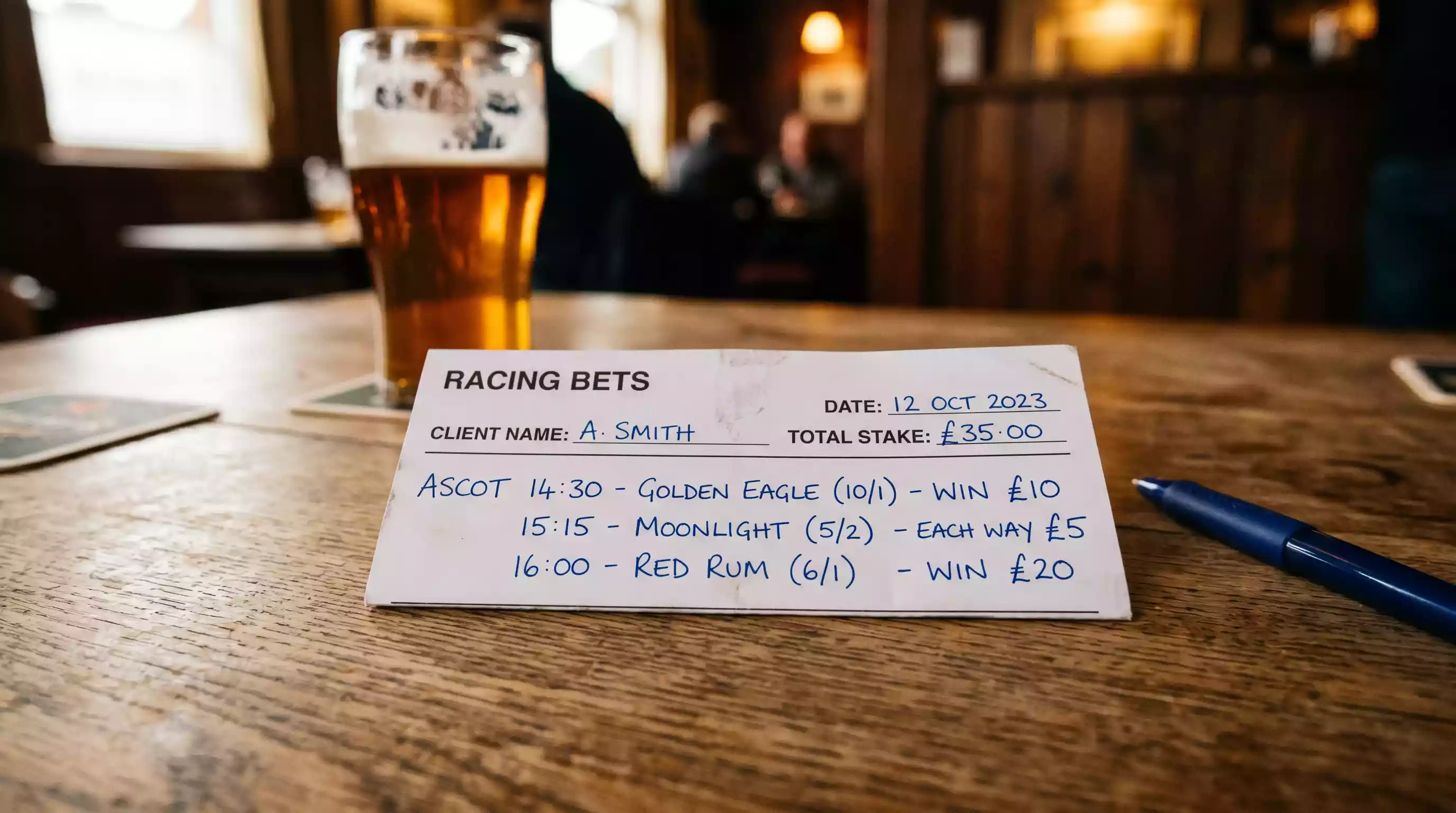
Each-way is where beginners often get confused, but it’s straightforward once you see it clearly. An each-way bet is two bets in one: a win bet and a place bet. Your stake doubles because you’re placing two wagers. If the horse wins, both parts pay out. If it places but doesn’t win, you lose the win portion but collect on the place. The place odds are typically one-quarter or one-fifth of the win odds, depending on the race type. For a detailed breakdown of how each-way betting works and when it offers genuine value, I’ve written a separate guide.
For your first few weeks, stick with win singles. They’re the easiest to understand, the simplest to track, and they teach you how odds translate to returns without the added complexity of multiple selections or place calculations. Once that feels natural, branch out. Accumulators and exotic bets can wait — they’re not going anywhere.
Ready to Place Your First Bet
The gap between knowing nothing and placing your first bet is smaller than it feels. You understand how to choose a reputable bookmaker now, what the registration process involves, and how to read the basic elements of a racecard. You know the difference between win, place, and each-way bets. That’s genuinely more than I knew when I wandered into that Cheltenham pub a decade ago.
Start small. Pick an afternoon meeting you can watch — either through bookmaker streaming or on ITV Racing — and make a couple of modest win singles on horses whose names or colours appeal to you. Don’t overthink it for now. The goal is experiencing the mechanics: seeing your selection in the bet slip, watching the race, understanding what happens when you win or lose. Analysis and strategy come later, built on this practical foundation.
The racing world has a way of pulling you in once you’ve placed that first bet. I’ve seen friends who started exactly where you are now develop into serious students of form, finding genuine edge and joy in the process. Others remain recreational punters who enjoy the odd flutter at festivals. Both paths are valid. The only wrong approach is never starting at all.
Getting Started: Quick Answers
How much money do I need to start betting on horses?
You can place bets from as little as 10p at most UK bookmakers, though pound or two is more practical for seeing meaningful returns. Start with whatever amount you’re comfortable losing entirely – treat it as entertainment spending, not investment capital. I began with a twenty pound bank and learned more from those small stakes than any amount of reading.
Is it legal to bet on horses online in the UK?
Yes, completely legal provided you’re 18 or older and using a bookmaker licensed by the UK Gambling Commission. Every legitimate operator displays their licence number on their website, usually in the footer. The Gambling Commission maintains a public register where you can verify any licence before signing up.
Written by the editors at bet for Horse Racing.