Horse Racing Form Guide: Reading the Racecard
 Available in US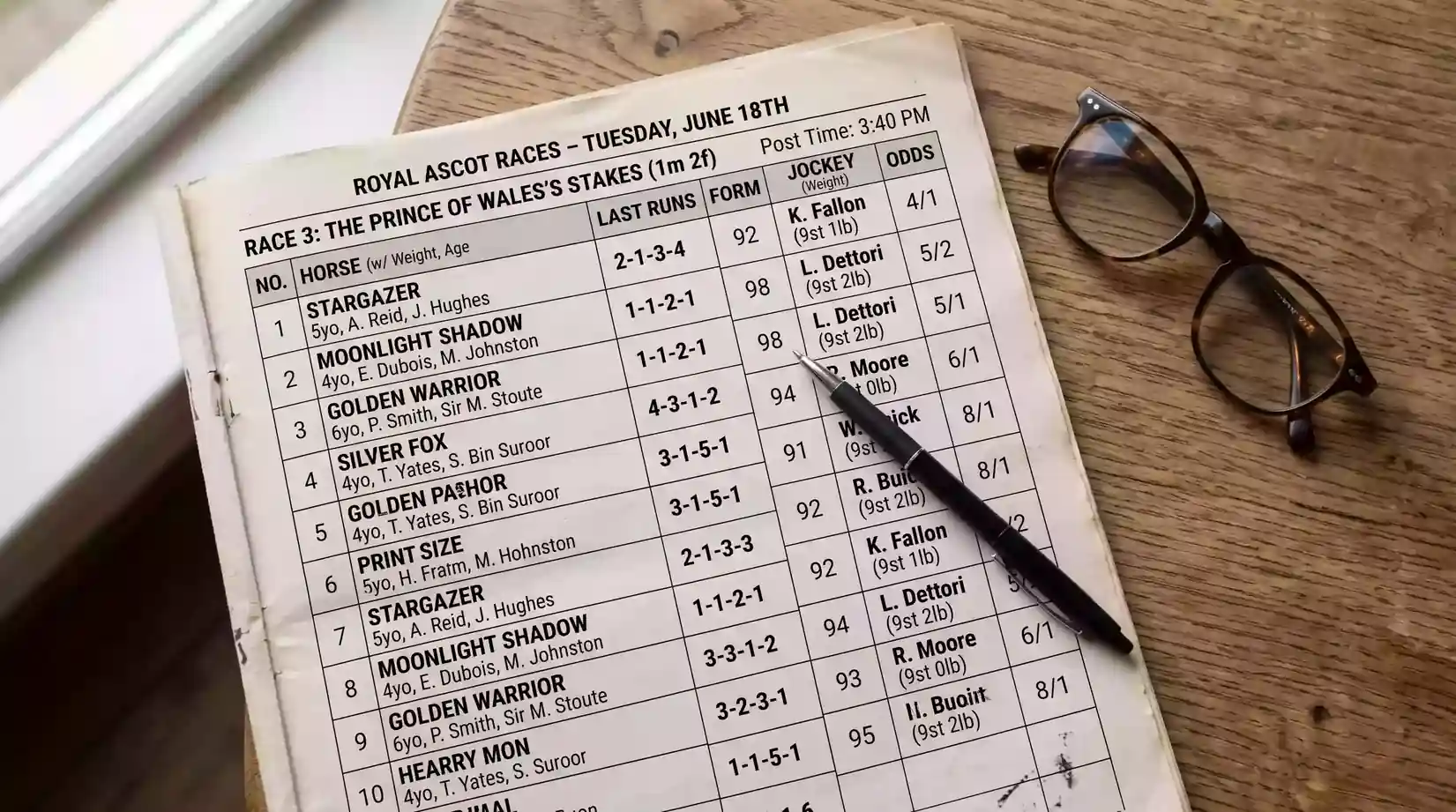
My first attempt at reading a racecard ended in confusion. Numbers, letters, symbols, abbreviations — it looked like encrypted code rather than useful information. A decade later, I can glance at a form line and instantly assess whether a horse deserves consideration. The difference is simply knowing what you’re looking at.
Form is the foundation of informed betting. Those cryptic figures tell stories: horses improving or declining, ground preferences revealed, course specialists identified. UK racing attracts over 5 million racecourse visitors annually, many of whom bet without truly understanding the information available to them. Reading form properly separates punters with genuine insight from those essentially guessing.
Understanding the Racecard
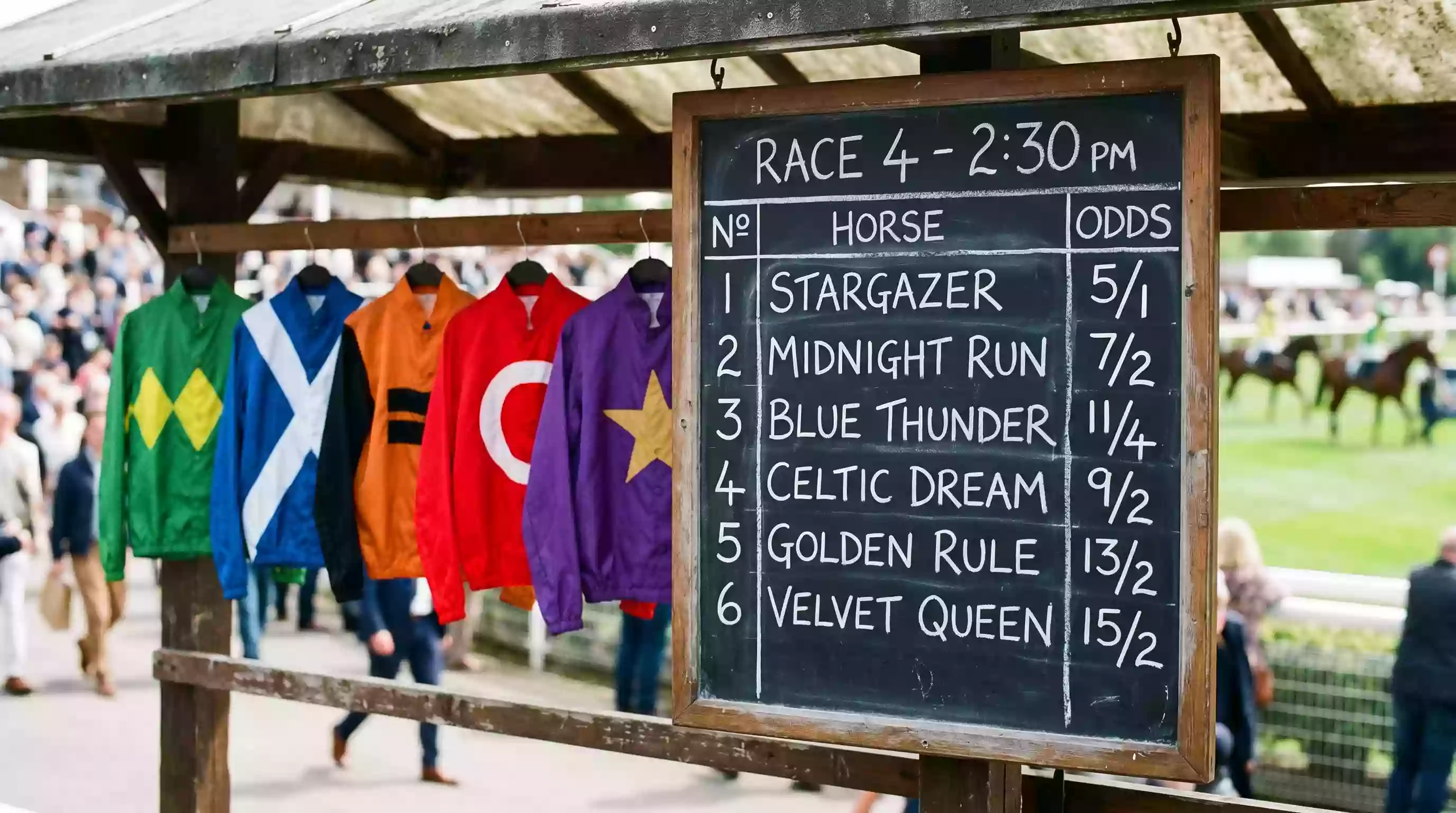
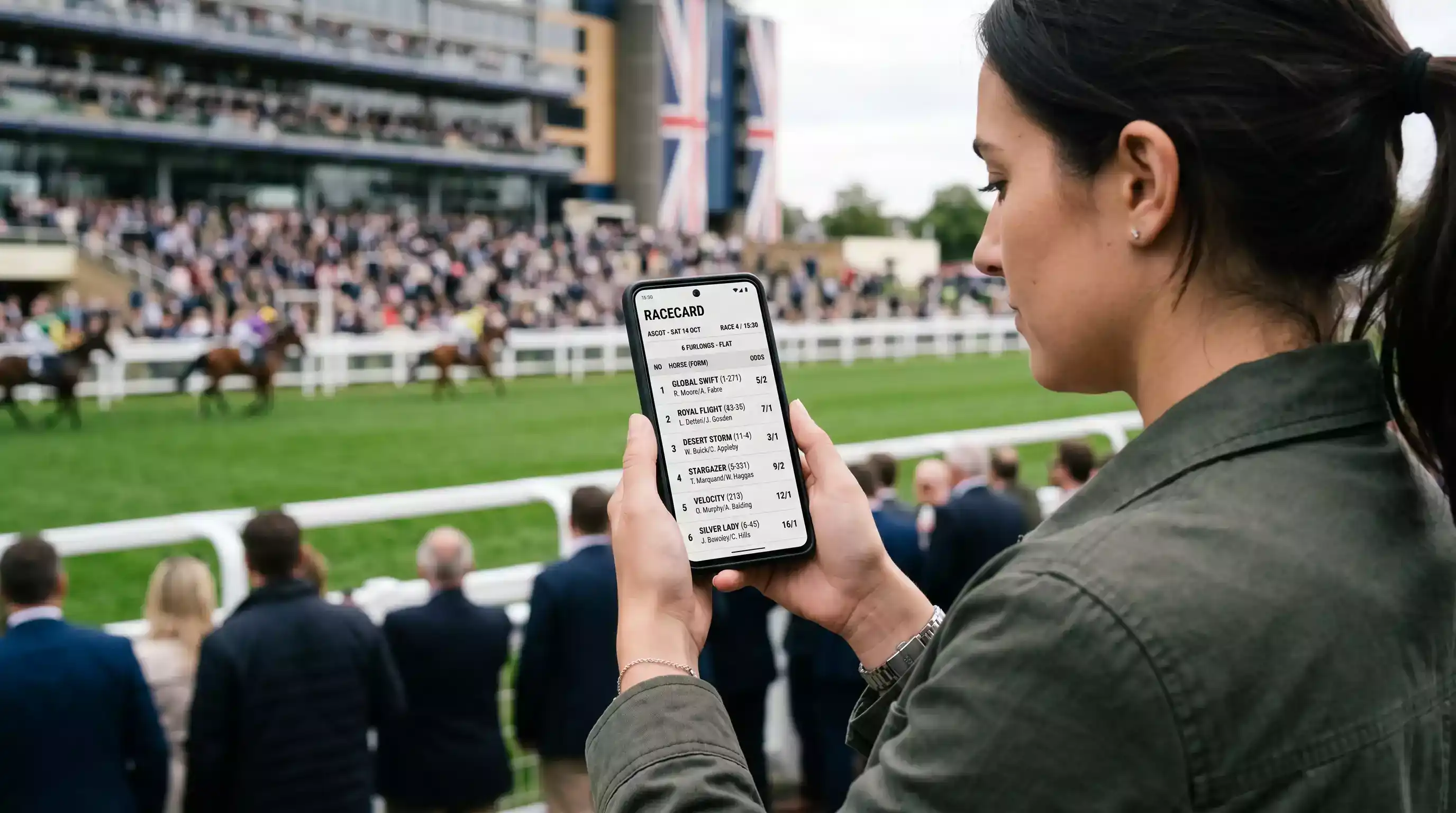
A racecard contains everything you need to assess a horse’s chances, presented in compressed format that becomes intuitive with practice.
The horse’s name appears alongside its number (the saddlecloth number for identification during the race), age, and weight carried. For handicaps, weight indicates how the official handicapper rates the horse relative to rivals — lower weight suggests lower ability, though also less burden to carry.
Jockey and trainer appear prominently. In racing, both matter enormously. A top jockey booking signals connections’ confidence; a trainer with excellent course or race-type statistics indicates horses specifically prepared for the task. Over time, you’ll learn which combinations perform above expectation.
The form figures — that string of numbers and letters after each horse’s name — show recent finishing positions. Most racecards display the last six runs, reading left to right from oldest to most recent. A form line of “213142” means the horse finished second, first, third, first, fourth, second across its last six outings.
Additional information includes: breeding (sire, dam, and damsire), owner, colours carried, days since last run, official rating (if applicable), and draw position (crucial in flat racing).
Decoding Form Figures
Anne Lambert, as Interim Chair of the HBLB, noted that racing faces significant challenges requiring the industry to adapt. Understanding form helps punters navigate those challenges — betting with knowledge rather than sentiment.
Numerical figures show finishing positions: 1 means won, 2 means second, through to 9 for ninth. The figure 0 indicates finishing tenth or worse — the horse completed the race but well behind. In National Hunt racing particularly, 0 often signals horses finding the competition too strong or failing to stay the trip.
Letter codes convey specific events. “F” means fell — the horse didn’t complete the race due to jumping error. “U” indicates unseated rider — the jockey parted company without the horse falling. “P” means pulled up — the jockey stopped riding because the horse wasn’t travelling or had a problem. “R” indicates refused at a fence or hurdle. “B” means brought down by another horse’s fall.
Dashes separate different seasons. A horse might show “1234/123” — the slash indicates a break between racing campaigns. This helps distinguish recent form from older runs that might be less relevant to current ability.
Course and distance information often appears alongside form. “C” or “CD” next to a horse’s name indicates previous wins at today’s course, today’s distance, or both. Course-and-distance winners have proven they handle the specific demands of the track and trip — a significant positive indicator.
Key Form Indicators to Watch
Raw finishing positions only tell part of the story. Context determines whether a “2” represents an encouraging run or a disappointing one.
Course form matters more than most punters realise. Some tracks ride entirely differently from others — Epsom’s undulations versus Newmarket’s straight mile, Cheltenham’s stiff climb versus Aintree’s flat finish. Horses who’ve performed well at today’s venue have demonstrated they handle its unique demands.
Distance preferences emerge over multiple runs. A horse with a form line of “111” at ten furlongs but “543” at twelve furlongs clearly has stamina limitations. Spotting these patterns — and when today’s trip suits or stretches a horse — provides edge the market doesn’t always reflect.
Going preferences can be decisive. Some horses transform on soft ground while struggling on quick surfaces; others are the opposite. The form figures alone don’t show this — you need to check the going description for each run. A horse whose best efforts came on soft shouldn’t be backed on good to firm without strong reason to believe it’ll adapt.
Class of race requires attention. A horse who won last time might have done so in a much weaker contest than today’s. Conversely, a horse who finished fourth in a Group 1 has shown far more ability than one who won a seller. Form figures must be interpreted through the lens of opposition quality.
Weight carried in handicaps affects performance assessment. A horse who won carrying 8st 7lb faces different prospects when raised to 9st 5lb. The handicapper’s adjustments can turn winners into also-rans and vice versa. Track how weight changes between runs and whether today’s burden represents opportunity or obstacle.
Days since last run provides fitness context. Horses returning from long breaks might need the run to reach peak condition. Those on quick turnarounds demonstrate current wellbeing but might face cumulative fatigue. The optimal layoff varies by horse and training method — some yards excel at first-time-out winners; others rely on prep runs.
Using Form to Your Advantage
Form reading improves with practice. The first hundred racecards you study will feel slow and confusing; the next thousand become progressively more intuitive. Eventually, you’ll scan form lines and immediately recognise patterns — improving horses, declining veterans, course specialists, ground-dependent types.
Don’t isolate form from context. A string of good form figures means little if achieved against weak opposition on unsuitable ground at the wrong trip. Conversely, poor recent figures might mask a horse now returning to conditions that suit. The punters who profit read form critically rather than accepting it at face value.
Combine form with live information where possible. How does the horse look in the paddock? Is it sweating, calm, on its toes? How did it travel to post? Form tells you what happened before; observation tells you what’s happening now. The best assessments integrate both sources rather than relying exclusively on historical data.
Technology has democratised form access. What once required expensive subscriptions and specialist publications now appears free on betting apps and racing websites. The advantage no longer lies in access to form but in interpretation — understanding what the figures mean and how they apply to today’s race.
Build your own notes on horses you follow. Published form provides facts; your observations add interpretation. Noting that a horse “hung left throughout” or “travelled strongly until fading” captures details that numerical figures miss. Over time, these personal notes become invaluable supplements to standard form data.
Trainer intentions sometimes emerge through form patterns. A horse given an easy time in recent races might be being aimed at a specific future target. Conversely, hard races in quick succession might indicate connections grabbing opportunities rather than protecting for something bigger. Reading between the lines of form reveals intentions that straightforward figures obscure.
Equipment changes noted alongside form figures deserve attention. The addition of blinkers, a tongue-tie, or first-time cheekpieces signals trainers trying something new — often on horses whose recent form has disappointed. These interventions sometimes produce immediate improvement; tracking their impact develops judgment about when equipment changes matter.
Form Guide Questions
What do the form figures mean in horse racing?
Form figures show a horse’s recent finishing positions, reading oldest to newest. Numbers 1-9 indicate finishing positions; 0 means tenth or worse. Letters indicate events: F for fell, P for pulled up, U for unseated rider. A dash or slash separates different racing seasons.
Where can I find free horse racing form?
Most bookmaker apps and websites display full form with their racecards. The Racing Post offers detailed form online, with some features free and others requiring subscription. Racing websites and apps provide racecard form at no charge. Course racecards at meetings contain essential form figures.
Created by the ”bet for Horse Racing” editorial team.