How to Read Horse Racing Odds: Complete Beginner’s Guide
 Available in US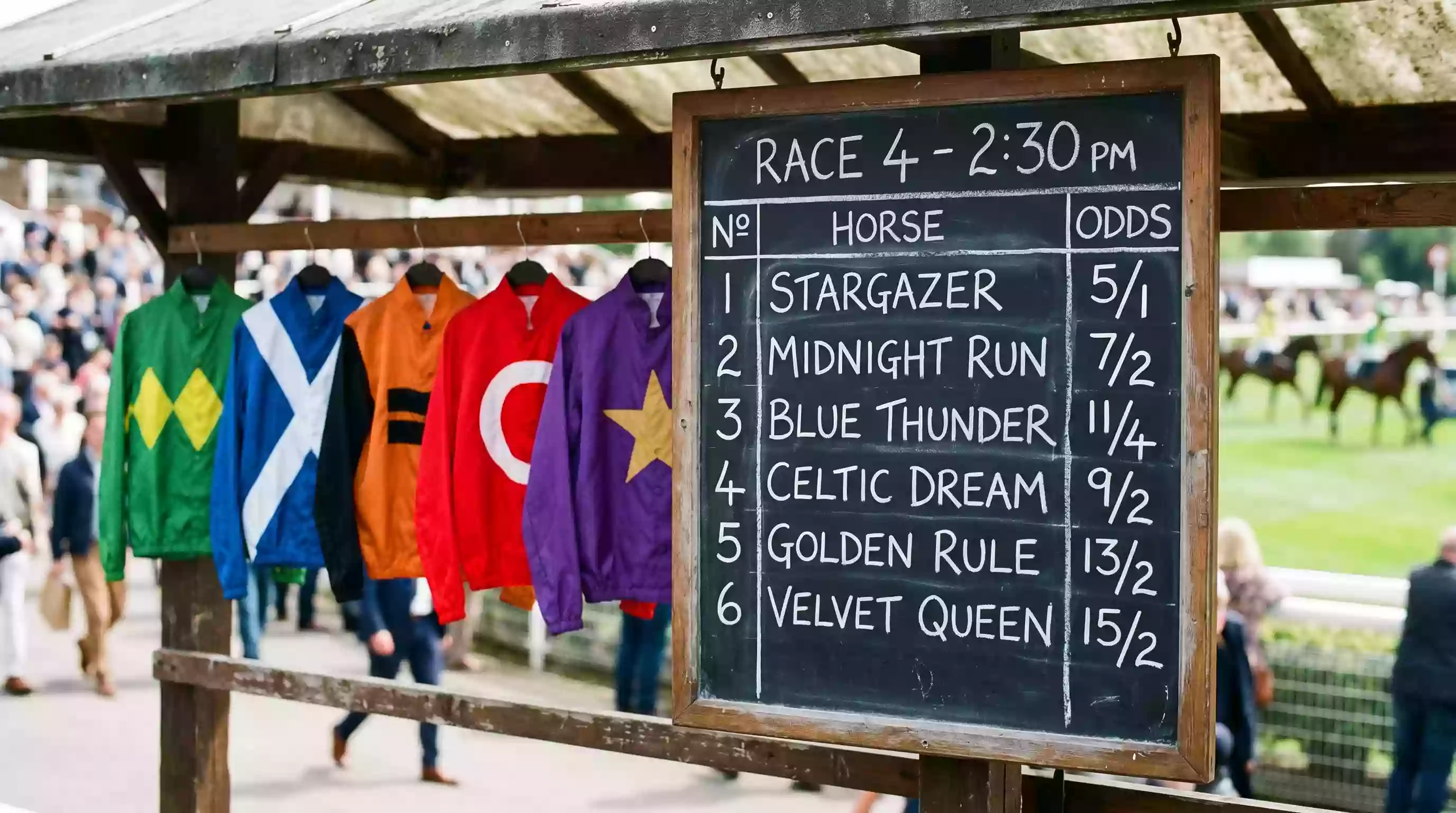
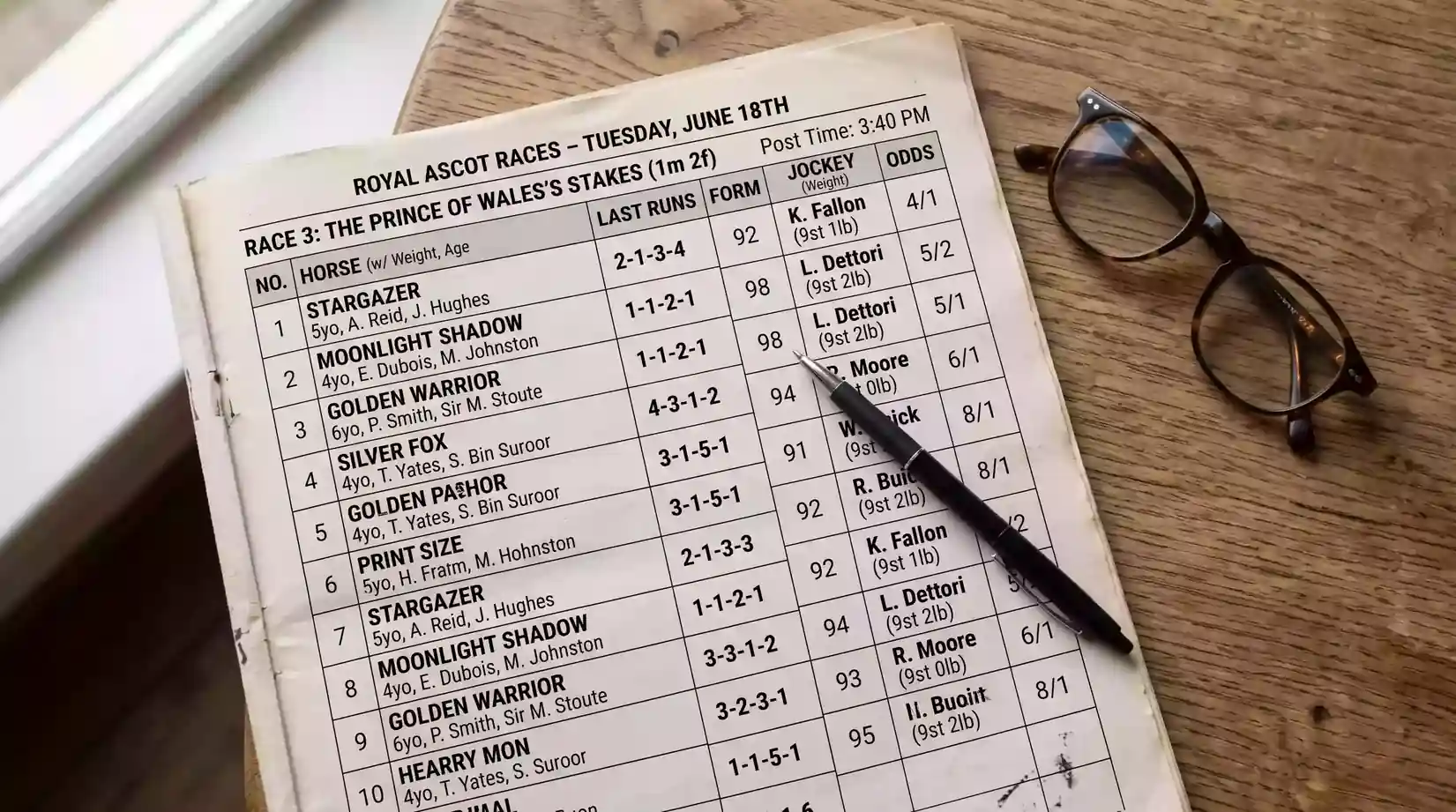
I spent my first day at a racecourse completely baffled by what everyone around me seemed to understand instinctively. “I’ll take 11/4” someone said at the bookmaker’s pitch. “That’s drifted from 9/4 this morning.” I nodded as if I understood while wondering whether 11/4 was better or worse than 9/4, and what either of them actually meant for my potential winnings.
Odds are the language of betting. They tell you what you’ll win, how likely a result is considered, and whether the price being offered represents value. Until you can read them fluently, betting remains guesswork. This guide takes you from confusion to competence — the same journey I eventually made, just faster.
Understanding Fractional Odds
British horse racing uses fractional odds as the default format. They look like fractions because they are: the first number represents profit, the second represents stake. 5/1 means five pounds profit for every one pound staked. 7/2 means seven pounds profit for every two pounds staked.
The calculation is straightforward once you see the pattern. Multiply your stake by the first number, divide by the second — that’s your profit if you win. For a £10 bet at 5/1: (£10 x 5) / 1 = £50 profit, plus your £10 stake back, totalling £60 returned. For a £10 bet at 7/2: (£10 x 7) / 2 = £35 profit, plus stake, totalling £45 returned.
Simple odds make the maths easy. 4/1 means quadruple your stake as profit. 10/1 means ten times your stake. When the second number is 1, you’re just multiplying. It’s when the second number changes that people get confused — 11/4, 100/30, 85/40 — but the same formula applies.
Some prices appear odd because they evolved from traditional bookmaker increments. 11/4 exists because it sits between 5/2 and 3/1. 100/30 (which simplifies to 10/3) offers a slightly better return than 3/1. The exact graduations matter when comparing prices or understanding market movements, but for calculating returns, the formula never changes.
Decimal Odds: The Alternative Format
Decimal odds show your total return including stake, rather than just profit. They’re standard across Europe and increasingly available as an option on UK betting sites. Some punters find them easier; others prefer sticking with fractional.
In decimal format, 2.00 means your total return equals twice your stake — equivalent to evens in fractional. 5.00 means five times your stake returned — equivalent to 4/1. The decimal figure always includes your original stake, so any decimal above 1.00 represents some return.
Converting between formats isn’t difficult. Take fractional odds, divide the first number by the second, add 1. So 5/1 becomes (5/1) + 1 = 6.00 decimal. 7/2 becomes (7/2) + 1 = 3.5 + 1 = 4.50 decimal. Going the other way: subtract 1 from the decimal, then express as a fraction simplified if possible.
Decimal odds make comparing prices easier because they’re all on the same scale. Is 3.75 better than 11/4? Converting 11/4 gives 3.75 — they’re identical. Is 4.20 better than 16/5? 16/5 converts to 4.20 — again identical. The decimal system eliminates the mental arithmetic fractional comparison sometimes requires.
Calculating Your Returns
Let me walk through several examples to solidify the maths.
A £5 bet at 9/2: profit is (5 x 9) / 2 = £22.50. Add your stake back for £27.50 total return. At decimal 5.50, the calculation is simply 5 x 5.50 = £27.50 — same answer, different route.
A £20 bet at 6/4: profit is (20 x 6) / 4 = £30. Total return: £50. Decimal equivalent is 2.50, so 20 x 2.50 = £50.
A £10 each-way bet at 8/1 with 1/4 place odds and three places paying: your stake is actually £20 (£10 win, £10 place). If the horse wins: win portion returns (10 x 8) + 10 = £90, place portion returns (10 x 2) + 10 = £30 (place odds are 8/1 divided by 4 = 2/1). Total: £120. If the horse places but doesn’t win: win portion loses £10, place portion returns £30. Net return: £20, breakeven on stake.
Accumulators multiply through each leg. A double at 3/1 and 4/1 on £10: first leg returns (10 x 3) + 10 = £40. That £40 goes onto leg two, returning (40 x 4) + 40 = £200. Alternatively, multiply decimal odds: 4.00 x 5.00 = 20.00, then 10 x 20.00 = £200.
Odds Terminology You Need to Know
Racing has its own vocabulary for describing prices. Understanding these terms means following market commentary and conversations at the track.
Evens (or even money) means 1/1 — you win the same amount as you stake. “He’s gone evens” means the price is 1/1.
Odds-on means the potential profit is less than your stake — the horse is a strong favourite. 1/2 returns fifty pence profit per pound staked. 1/5 returns just twenty pence. Odds-on horses are expected to win but offer poor returns.
Odds-against is everything higher than evens. 2/1, 5/1, 100/1 — all odds-against, where profit exceeds stake if successful.
Short price describes small odds — the horse is fancied but offers modest returns. “He’s very short” might mean 4/6 or 1/2.
Big price means large odds, an outsider. “She’s a big price at 25/1” indicates limited market confidence but substantial potential return.
The favourite is whichever horse has shortest odds. Joint-favourites share the shortest price. Second-favourite is next in the betting.
Odds and Probability: The Connection
Odds reflect implied probability — the market’s assessment of how likely an outcome is. Understanding this connection helps identify value.
Convert odds to probability: divide the second number by the sum of both numbers, multiply by 100. For 4/1: 1 / (4+1) x 100 = 20%. The market implies this horse has a 20% chance of winning.
Decimal odds make this easier: divide 1 by the decimal, multiply by 100. For 5.00: (1/5.00) x 100 = 20%.
The overround explains why bookmaker probabilities don’t sum to 100%. A six-runner race might have implied probabilities totalling 115% when you add up all runners. That extra 15% is the bookmaker’s margin — their built-in profit. The higher the overround, the worse the value for punters collectively.
Value betting means finding horses whose true probability exceeds their implied probability. If you believe a 4/1 shot (20% implied) actually wins 28% of the time, you’ve found value. Consistently betting where your assessment exceeds market assessment produces long-term profit — though accurately making those assessments is the hard part.
Confidence with Odds
Reading odds becomes automatic with practice. After a few weeks of conscious calculation, you’ll glance at 7/2 and immediately know it means roughly three-and-a-half times your stake in profit. You’ll spot value and poor prices instinctively. The maths that once seemed arcane becomes second nature.
Start by practising on small stakes where getting calculations wrong doesn’t cost much. Check your mental maths against bet slip displays before confirming. Use decimal format if it feels more intuitive, switching back to fractional once you’re comfortable.
The fluency goal is understanding what prices mean without thinking about it. When you hear “he’s drifted from 5/2 to 7/2” you want immediate comprehension: confidence has dropped, the implied win probability fell from 29% to 22%, and the return if he wins rose from £25 to £35 on a tenner. That kind of instant interpretation unlocks the full experience of racing markets.
Odds Questions
How do I read horse racing odds?
Fractional odds show profit per unit staked. At 5/1, you win five pounds profit per pound wagered, plus your stake back. Multiply your stake by the first number, divide by the second, add your original stake for total return. Decimal odds show total return including stake — multiply stake by the decimal for your return.
What does 11/4 mean in horse racing?
At 11/4, you win eleven pounds profit for every four pounds staked. For a ten pound bet: (10 x 11) / 4 = £27.50 profit, plus your £10 stake back, totalling £37.50. This sits between 5/2 (£25 profit on £10) and 3/1 (£30 profit on £10).
Written by the editors at bet for Horse Racing.